Author: qdsfvm

  • Marilyn Monroe Was on the Moodboard at the 2026 CFDA Awards—See the Photos

    Marilyn Monroe Was on the Moodboard at the 2026 CFDA Awards—See the Photos

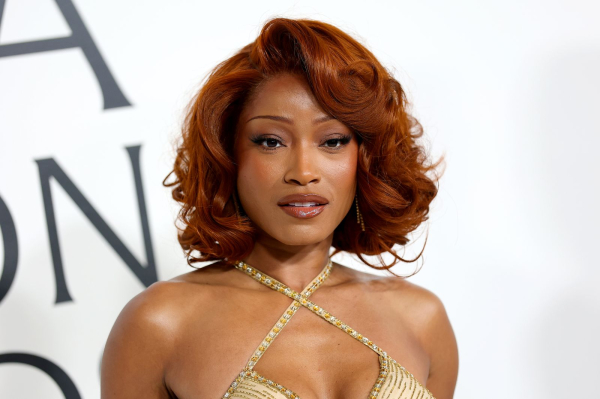
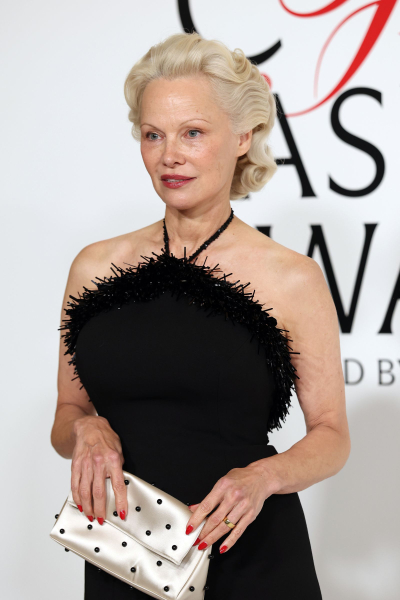
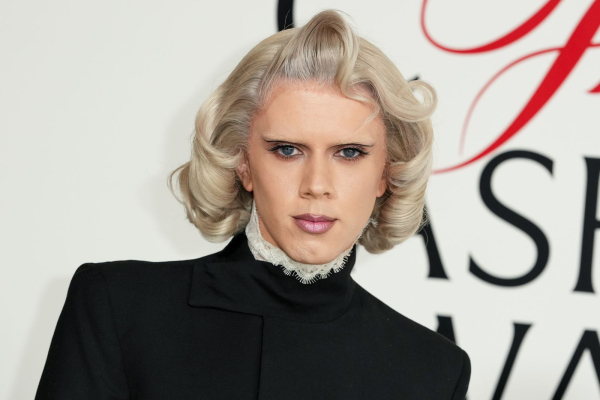
    Cole Escola Keke Palmer and Pamela Anderson wear vintagestyle curls.Getty ImagesSave StorySave this storySave StorySave this story

    The phrase “old Hollywood glamour” is a bit of a cliché at this point; it's been overused as a way to describe a specific red carpet moment, like a particularly classic gown or peekaboo hairstyle à la ‘40s star Veronica Lake. But on the flipside, that kind of timeless beauty truly never goes out of style, and Keke Palmer, Pamela Anderson, and Cole Escola all put their own unique spin on one of Marilyn Monroe's signature hairstyles for the 2026 CFDA Awards.

    Let's start with Palmer, who hosted the evening's events and wore a stunning and super-rare archival Bob Mackie dress originally made for ‘70s star Raquel Welch’s appearance on The Cher Show. (Got all that?) The actor-singer-host extraordinaire wore her red hair in a voluminous Marilyn-style bob styled in soft curls. Her hair was parted deeply to one side with a portion teased up and curled, similar to how Monroe wore her hair in movies like Gentlemen Prefer Blondes.

    Keke Palmer wears a gold halter dress and red hair styled in a curly bob.Getty Images

    Next up, Anderson! The actor is a major cinephile and has looked to classic films for hair inspiration in the past, including '80s French films and Monroe herself. Anderson went for a more sculpted take on Monroe-esque curls, wearing her platinum hair swept back from her face and tightly curled. She skipped the cat-eye liquid liner but wore a modern twist on Monroe's signature red lipstick, slicking on a glossy shade of cherry and wearing the same color on her nails.

    Pamela Anderson wears a black textured halter dress red nail polish and a curled blonde hairstyle.Getty Images

    And as for Escola, the Tony-winning actor and writer's film-star curls landed right between Palmer's and Anderson's, style-wise, with a pageboy shape and that dramatic swoop teased and sculpted into an exaggerated shape for a cheeky finish.

    Cole Escola wears a highnecked black jacket and a platinum hairstyle similar to Marilyn Monroe.Getty Images

    Monroe was definitely on the moodboard for the evening, proving that old Hollywood glamour can easily be new Hollywood glamour too. It's even cooler when you make it yours interpret it through your own special style lens!

  • 10 Best At-Home Hair Color Kits 2026 to Rival Salon Results

    10 Best At-Home Hair Color Kits 2026 to Rival Salon Results

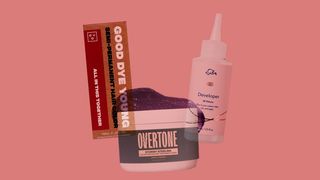
    A collage of Good Dye Young Overtone and eSalon hair dyes on a pink backgroundCollage: Jemeria Davison; Source images: Courtesy of brandsSave StorySave this storySave StorySave this story

    Whether you want to try out highlights or go all-over, today's best at-home hair color kits have made significant strides from the box dyes of years past—think the formulas themselves (nourishing ingredients that won’t leave hair feeling stripped), shade selection (neutrals, bolds, the works), and ease of use. And, if you don’t want to make the full commitment, semi-permanent hair dye or tinted hair glosses offer a temporary shade shift. Some dye kits also include color-depositing conditioners that’ll help boost shine (Dullness, who?). Target-specific formulas, including those for grays or outgrown roots, can enhance your silver or extend your salon color without compromising the overall health of your strands—the options are endless.

    Our Top At-Home Color Kits

    • Best Permanent Overall: eSalon Made for You Custom Hair Color, $33
    • Best Semi-Permanent Overall: Overtone Color Depositing Mask, $32
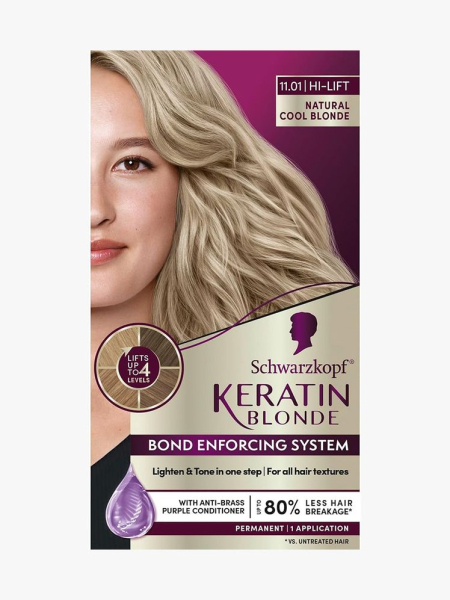
    • Best for Blondes: Schwarzkopf Keratin Blonde, $12
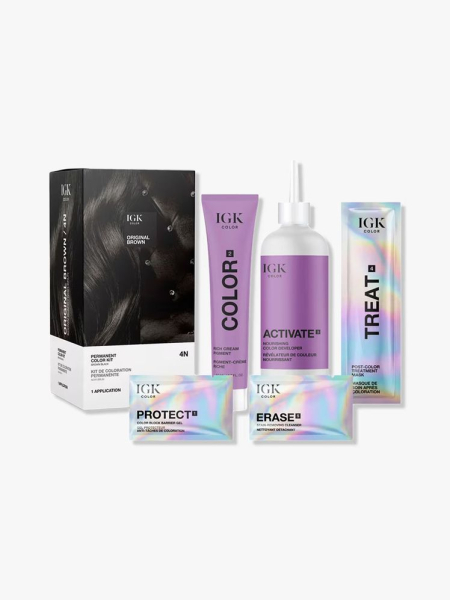
    • Best for Brunettes: IGK Permanent Color Kit, $31
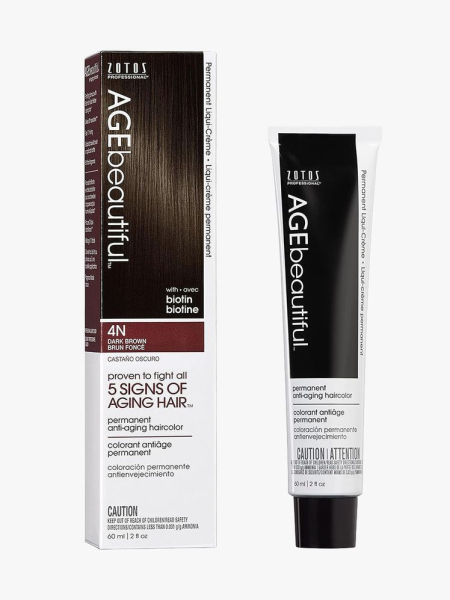
    • Best for Grays: AgeBeautiful Permanent Hair Color Cream, $12

    Frequently Asked QuestionsAccordionItemContainerButtonLargeChevron

    • How do I know what shade to dye my hair?
    • How much hair dye should you use?
    • How can I make my at-home hair dye last?
    • Meet the experts
    • How we test and review products
    • Our staff and testers

    Don't get us wrong, we love visiting our colorists, but the time (and cost) of getting professional dye jobs add up quickly. So, instead of keeping up with constant appointments, extend the life of your in-salon color treatments—or ditch them altogether, depending on what you're going for—with these vibrant at-home hair-coloring kits.

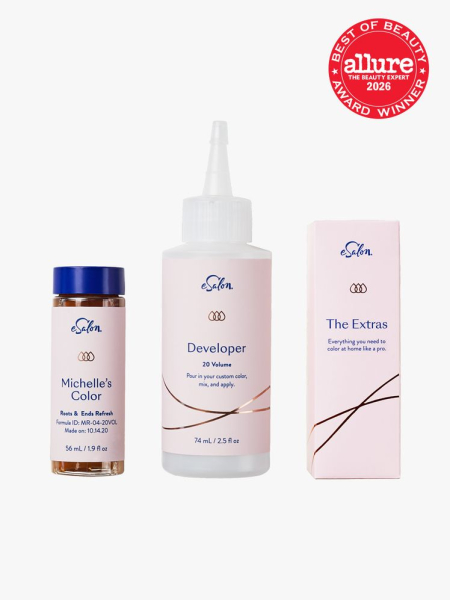
    Best Permanent Overall: eSalon Made for You Custom Hair Color

    eSalon Custom Hair Color Set in multiple branded components on a light gray background with the 2026 best of beauty seal in the top right cornerSave to wishlistSave to wishlist

    eSalon

    Custom Hair Color Set

    $33

    Amazon

    $33

    eSalon

    Why it’s worth it: Take the guesswork out of coloring your hair with eSalon's Made for You Custom Hair Color, a tailored service that features in-house colorists hand-mixing a color kit made just for you. Its high-quality, ammonia-free pigments are so spot-on that it's won five Best of Beauty Awards and four Readers' Choice Awards to date—no big deal. One of the reasons we love it: Allure tester Liana Schaffner previously said in her review of the kit that this is an ideal set for every skill level, even for hair dye beginners. "It basically makes DIY at-home hair color foolproof—the beauty equivalent of a soufflé recipe that won't collapse below sea level," she wrote.

    After answering a quick set of questions about your hair texture, skin tone, amount of grays, and so forth, a colorist whips up a bespoke batch of permanent or semi-permanent hair dye, complete with application tips, delivered right to your door.

    More to know

    AccordionItemContainerButtonLargeChevron

    • Formula type: permanent or semi-permanent
    • Shades: custom color only
    • Ammonia-free: yes

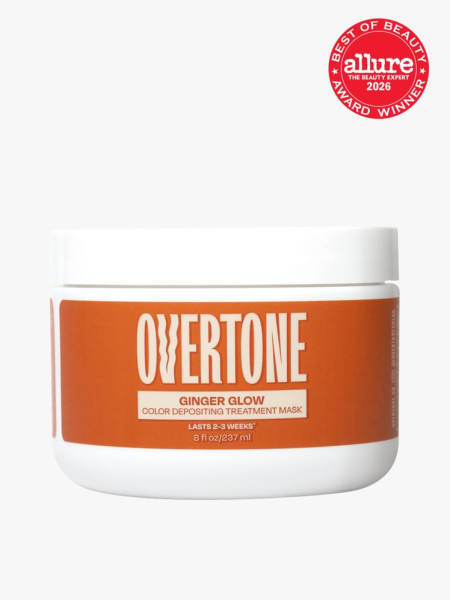
    Best Semi-Permanent Overall: Overtone Color Depositing Mask

    Overtone Color Depositing Treatment Mask white jar with orange label on light gray background with red Allure Best of Beauty seal in the top right cornerSave to wishlistSave to wishlist

    Overtone

    Color Depositing Treatment Mask

    $32

    Amazon

    $32

    Ulta Beauty

    Why It’s Worth It: Rather than lifting the hair shaft to deposit pigment, Overtone’s Color Depositing Mask coats the outside of your strands to avoid compromising hair health. The semi-permanent, color-depositing hair mask (and a 2026 Best of Beauty winner!) comes in 38 whopping shades—from subtle neutrals to vibrant hues—to achieve rich, true-to-you color at home. As a nourishing mask at its core, the formula is infused with natural oils, including jojoba, castor, sweet almond, and coconut oils, to deeply moisturize, improve softness, and enhance shine as it transfers color. With gloves, apply the mask to dry hair in sections and leave it in for at least 10 to 15 minutes before rinsing so that you can achieve the most vibrant color.

    Tester feedback from designer Briana Rengifo

    AccordionItemContainerButtonLargeChevron

    "One of the easiest hair dyes to use! I keep this on rotation as one of my favorites since it’s quick to apply and doesn't stain my neck or tub. And because it's a conditioner, it always leaves my hair soft, silky—and a totally new shade depending on my mood." —Briana Rengifo, designer

    More to know

    AccordionItemContainerButtonLargeChevron

    • Formula type: semi-permanent mask
    • Shades: 38
    • Ammonia-free: yes

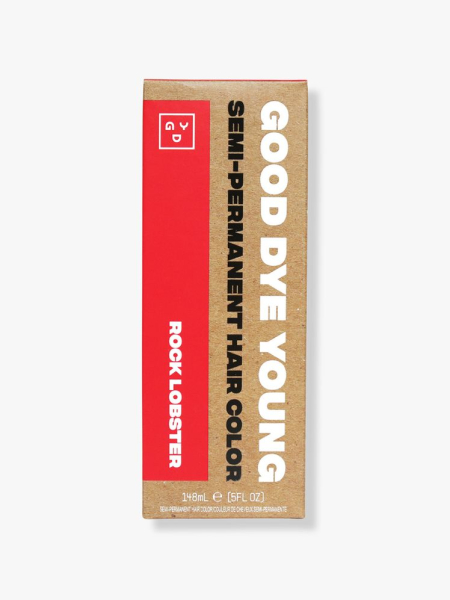
    Best for Vivid Colors: Good Dye Young Semi-Permanent Hair Color

    A box of the Good Dye Young Semi-Permanent Hair Color on a white backgorundSave to wishlistSave to wishlist

    Good Dye Young

    Good Dye Young Semi-Permanent Hair Color

    $19

    Amazon

    $19

    Ulta Beauty

    Why It's Worth It: If you’ve been toying with the idea of color, Good Dye Young's Semi-Permanent Hair Color has a vibrant lineup of neons and jewel tones to play around with. Fitting for essentially every hair type, this Hayley Williams-backed formula provides fun, pigmented color that doesn’t quickly wash off, including a variety of ultra-electric colors, like magenta, royal purple, green, and teal. The formula helps reduce the risk of damage with a conditioning and strengthening blend of sunflower seed oil, hydrolyzed rice protein, and glycerin, which are also all heroes at fighting color-fading and dryness. And because it's infused with bergamot essential oil, the citrus scent provides plenty of uplifting vibes. If you're looking for something a tad more low-key, check out the Best of Beauty-winning DyeDeposit, a color-depositing mask.

    Tester feedback from former senior news editor Nicola Dall'Asen

    AccordionItemContainerButtonLargeChevron

    “You can mix your Good Dye Young shade of choice into your conditioner for a boost of pigment in between touch-ups, but this formula is so long-lasting, you probably won't need to—and that's on Good Dye Young being low-key magical.” —Nicola Dall'Asen, former senior news editor

    More to know

    AccordionItemContainerButtonLargeChevron

    • Formula type: semi-permanent
    • Shades: 6
    • Ammonia-free: yes

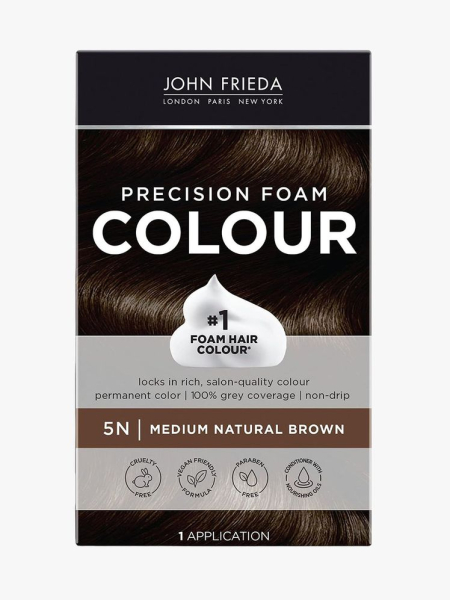
    Best for Beginners: John Frieda Precision Foam Colour

    John Frieda Precision Foam Colour box of brown hair dye on light gray backgroundSave to wishlistSave to wishlist

    John Frieda

    Precision Foam Colour

    $13 $12 (8% off)

    Amazon

    Why It's Worth It: "Anyone who's applied hair color knows that dripping [product] is an annoying part of the application process," says Los Angeles-based hairstylist Damian Monzillo about the advantages of foam application. Enter: John Frieda Precision Foam Colour, a permanent hair dye that’s a solid entry point for newbies—and an Allure Best of Beauty Award winner. Not only are you left with zero streaks most of the time, but best of all: a "clean bathroom and hairline," Monzillo says—a perk that everyone, especially beginners, benefits from. Plus, you won’t have to scroll online for an application guide: The kit comes with everything you need to nail the best color possible, including gloves, an after-color conditioner, and straightforward instructions. Keep in mind that most box kits come with a 20 volume developer, which means that the formula can lift hair "exactly one level lighter than where you currently are," Monzillo points out.

    To ensure a seamless, natural-looking dye job, Monzillo recommends using a little bit of Vaseline on and around your hairline to prevent any color lines from sticking around. He also advises dividing the hair into half-inch sections while dyeing to allow the color to absorb better. Take note: The results are always better when you take your time.

    More to know

    AccordionItemContainerButtonLargeChevron

    • Formula type: permanent
    • Shades: 19
    • Ammonia-free: no

    Best for Blondes: Schwarzkopf Keratin Blonde

    Schwarzkopf Keratin Blonde box of blonde hair dye on light gray backgroundSave to wishlistSave to wishlist

    Schwarzkopf

    Keratin Blonde

    $13 $12 (8% off)

    Amazon

    $12

    Walmart

    Why It's Worth It: Blondes may have more fun, but being a bottle blonde comes with its challenges: Whether natural or dyed, blonde hair is often more brittle, fine, and dry than darker hair, making it more damage-prone. The solution? Bicoastal celebrity hairstylist Marc Mena looks for a formula “that considers the hair’s condition as much as the finished color,” such as Schwarzkopf’s Keratin Blonde. Its three-step Bond Forcing System starts with a pre-color serum consisting of vitamin B6 and hydrolyzed collagen to condition dry ends and prep the strands for color. The color lightening kit itself—promising all-over blonde up to nine levels—infuses keratin with hydrolyzed silk and apricot kernel oil to reinforce the hair structure and minimize breakage as it lifts. It’s topped off with a two-in-one purple conditioner that pairs anti-brass benefits with a hydrating keratin complex for stronger strands.

    More to know

    AccordionItemContainerButtonLargeChevron

    • Formula type: permanent
    • Shades: 10
    • Ammonia-free: no

    Best for Grays: AgeBeautiful Permanent Hair Color Cream

    AgeBeautiful Permanent Hair Color Cream tube and box of hair dye on light gray backgroundSave to wishlistSave to wishlist

    AGEBeautiful

    Permanent Hair Color Cream

    $12

    Amazon

    $11

    Sally Beauty

    Why It's Worth It: Allure editors celebrate aging in all forms—grays included. While grays are a common reality of getting older, the truth is aging hair also experiences changes in texture and shine, making it difficult to color. Though we can’t reverse or halt grays, New York City-based colorist Tiffanie Richards calls AgeBeautiful’s Permanent Hair Color your best friend for gray hair coverage, whether you’re embracing the silver or looking to conceal grays. With soft neutrals and warm-to-cool grays, the kit is fitting for all stages of the graying process. Plus, it's more akin to a conditioning hair treatment, with ingredients such as biotin, melanin, keratin, and peptides that West Hollywood, California-based hairstylist Jess Gonzalez recommends for replenishing dry, dull mature hair.

    More to know

    AccordionItemContainerButtonLargeChevron

    • Formula type: cream
    • Shades: 87
    • Ammonia-free: no

    Best for Brunettes: IGK Permanent Color Kit

    IGK Permanent Hair Color Kit on light gray backgroundSave to wishlistSave to wishlist

    IGK Hair

    Permanent Hair Color Kit

    $31

    Amazon

    $31

    Shop

    $31

    Ulta Beauty

    Why It's Worth It: IGK's Permanent Hair Color is an easy-to-apply formula recommended by Lorena Martinez Valdes, a Chicago-based colorist, for its vibrant, dimensional color. (Translation: It makes you look like you've just stepped out of a high-end salon.) "It focuses on increasing the shine level, which many at-home color kits lack," Valdes notes. For natural or dyed brunettes, that makes all of the difference. Plus, New York City-based hairstylist Gillian Doland says the shade range consists of modern, rich, and natural hues, so results appear far from flat and streaky. The formula also leaves your hair feeling softer and smoother with moisturizing squalane and glycerin, among other nourishing ingredients.

    More to know

    AccordionItemContainerButtonLargeChevron

    • Formula type: permanent
    • Shades: 21
    • Ammonia-free: yes

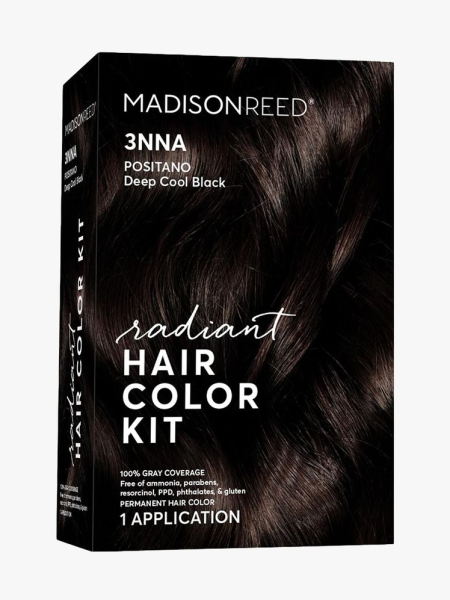
    Best for Darker Shades: Madison Reed Radiant Hair Color Kit

    Madison Reed Radiant Hair Color Kit box of black hair dye on light gray backgroundSave to wishlistSave to wishlist

    Madison Reed

    Radiant Hair Color Kit

    $35

    Amazon

    $35

    Ulta Beauty

    Why It’s Worth It: According to North Carolina-based hairstylist Taylor Murphy and Doland, Madison Reed’s Radiant Hair Color Kit is your best bet for salon-quality results. Its dark, dimensional shade range offers complete gray hair coverage and all-over color in just 35 minutes, while a strengthening, circulation-boosting blend of keratin, argan oil, and ginseng root extract helps protect hair health. Bonus: The formula comes in a thick cream texture that has zero harsh smell (it’s ammonia-free!), zero drips, and zero mess.

    More to know

    AccordionItemContainerButtonLargeChevron

    • Formula type: permanent
    • Shades: 33
    • Ammonia-free: yes

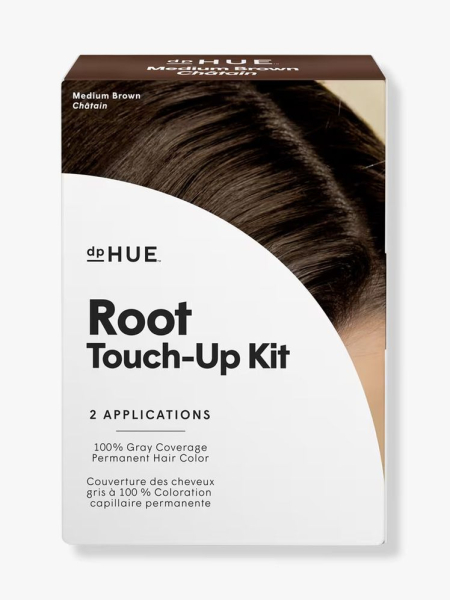
    Best for Roots: DpHue Root Touch-Up Kit

    DpHue Root Touch-Up Kit box of brown hair dye on light gray backgroundSave to wishlistSave to wishlist

    dpHue

    Root Touch-Up Kit

    $37

    Amazon

    $37

    Dermstore

    $37

    Revolve

    Why It’s Worth It: Don’t let overgrown roots get in the way—especially if this Best of Beauty-winning root touch-up kit from DpHue has anything to do with it. It brings color back to life with 100% coverage (even on stubborn grays) until your next salon visit. The set also precisely conceals roots and the hairline—kudos to its application process, which includes mixing bowls, gloves, processing cap, and flat-bristled applicator brush (which you can use for mixing, parting, and applying)—for results that last up to two touch-ups. Plus, the gentle cream formula deposits color with low ammonia (high levels can strip cuticles of moisture) to help maintain the integrity of your strands.

    Tester feedback from executive beauty director Jenny Bailly

    AccordionItemContainerButtonLargeChevron

    "I have naturally medium brown hair with blonde highlights throughout and used the dark blonde shade. I woke up the next morning to a perfect match—and no grays. This wasn't my first root touch-up rodeo, and other kits just haven't been able to stamp out all my truly stubborn, pain-in-the-ass grays, and/or the color has faded away in a week or two. This one gave me full coverage and a rich, shiny color that lasted until the professional color appointment I finally made a month later." —Jenny Bailly, executive beauty director

    More to know

    AccordionItemContainerButtonLargeChevron

    • Formula type: permanent
    • Shades: 7
    • Ammonia-free: no

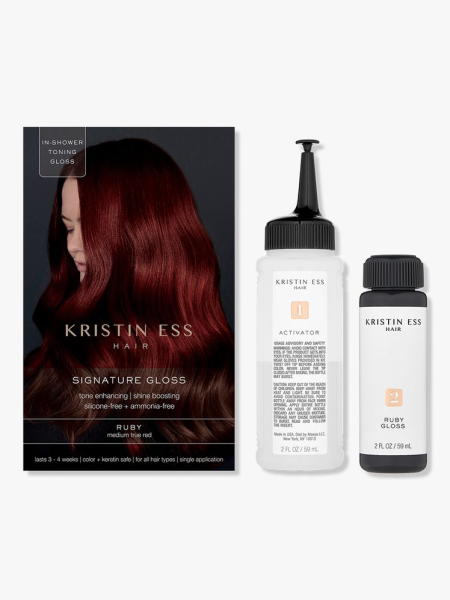
    Best Hair Gloss: Kristin Ess Signature Hair Gloss

    The Kristin Ess Signature Hair Gloss kit on a light grey backgroundSave to wishlistSave to wishlist

    Kristin Ess

    Kristin Ess Signature Hair Gloss

    $15

    Amazon

    $15

    Ulta Beauty

    Why It's Worth It: Think of this Kristin Ess hair gloss as a conditioning toner: Not only does it boost your color's vibrancy (no matter how long it's been since the salon visit), but it also keeps your hair feeling healthy and looking super shiny. Recommended by bicoastal hair colorist Cherin Choi, its Alkaline Neutralizing System (a gentle pH system) adds a layer of much-needed protection, preventing hard-water minerals from being deposited onto your hair and scalp, plus an Anti-Oxidant Complex (a.k.a. a proprietary blend of conditioning ingredients such as avocado, sunflower seed, and castor seed oils) that helps slow the color fading process and keep your hair vibrant for longer. All in all, your color will last three to four weeks and gradually fade depending on how often you wash your hair.

    More to know

    AccordionItemContainerButtonLargeChevron

    • Formula type: temporary
    • Shades: 8
    • Ammonia-free: yes

    Frequently Asked Questions

    How do I know what shade to dye my hair?

    The first rule of thumb—and a solid piece of advice to live by—is that looks can be deceiving. It may seem like your dream shade is staring right at you, but our best bet is to turn the package around and see how the formula will actually look on your hair type, explains hairstylist Andrew Fitzsimons, who the Kardashian-Jenner family has on speed dial.

    "Be sure to thoroughly consult the chart on the side or the back, which gives a better indication of where your hair color will end up, based on your beginning hue," says Fitzsimons. Dana Ionato, a New York City-based colorist, agrees: "The color always ends up lighter than the model's hair on the packaging [because] the developer in at-home permanent dyes is very strong—stronger than the ones we use in the salon—so it lifts the color and makes it lighter than what you see on the box."

    Even if you consult the back of the box for guidance, it can still be tricky to figure out your perfect shade. According to Ionato, for at-home permanent dyes, your best bet is choosing a color that's a touch darker than what you're going for because of the strong developer. But for semi-permanent dyes, it's the opposite. "Semi-permanent formulas don't have a developer, meaning they get darker and darker the longer you leave them in your hair, so it's safer to choose a color that's a bit lighter from the get-go," Ionato explains.

    According to Fitzsimons, conditioning is another crucial step you don't want to miss. "Using a deep conditioner at the end of the dyeing process seals the cuticle, so your strands stop absorbing the color," he says. “If you skip conditioning, you'll end up darker than you expected.”

    How much hair dye should you use?

    You’d be surprised by the amount of product you might need to use to completely transform your hair. According to bicoastal hairstylist Meri Kate O’Conner, hair can quickly soak up hair dye, especially if it is damaged—meaning your cuticles are lifted and more porous—which can lead to missed spots once you run out of product. “Never try to stretch the formula—insufficient saturation [flat or streaky dye] is one of the biggest causes of patchy color,” mentions Mena.

    Your hair length and density also play a factor in how much product you use. “If you have short or fine hair, one box will typically be enough, but if you have long, thick, or very dense hair, I always recommend having two boxes on hand” to completely saturate your strands, says Murphy. So when in doubt: “It’s always better to have extra color than not enough,” shares Gonzalez.

    How can I make my at-home hair dye last?

    To make your hair dye last, aftercare matters most to maintain color vibrancy. As a start, Mena recommends waiting at least 48 hours before washing your hair, incorporating a sulfate-free, color-safe shampoo on wash days, and always rinsing with cool to lukewarm water. Instead of conditioner, Richards says to swap it in with a hair mask to keep your cuticles healthy—Mena adds that this step is especially important for blondes, brunettes, and redheads. You’ll also want to avoid heat-styling (unless you use a heat protectant) as often as possible, excessive sun exposure, chlorine, and frequent use of clarifying shampoos—all of the above can accelerate fading.

    Meet the experts

    • Cherin Choi is a bicoastal hair colorist.
    • Gillian Doland is a New York City-based hairstylist.
    • Andrew Fitzsimons is a Los Angeles-based hairstylist.
    • Jess Gonzalez is a hair colorist at Flore Salon in West Hollywood, California.
    • Lorena Martinez Valdes is a colorist at Maxine Salon in Chicago.
    • Marc Mena is a bicoastal hairstylist.
    • Damian Monzillo is a Los Angeles-based hairstylist and colorist.
    • Taylor Murphy is a North Carolina-based hairstylist.
    • Meri Kate O’Connor is a colorist at Salon Benjamin in West Hollywood, California, and New York City.
    • Tiffanie Richards is a master colorist at Louise O’Connor Salon in New York City.

    How we test and review products

    We always enlist a range of testers for our makeup vertical, but hair-care products and tools are another story. While there are certainly products that can be used across different hair textures, lengths, curl patterns, thicknesses, colors (natural and unnatural), and needs, hair products are often created with specific consumers in mind. Many are created in order to address a concern (dandruff, breakage, brittleness) or to work most effectively for a specific hair type (4C curls, wavy hair, gray hair). You wouldn’t want to pick up a purple shampoo that’s only been reviewed by someone with, say, auburn hair, or a diffuser that's never been tested by anyone with curls—right?

    For our review of the best at-home hair color products, we enlisted the help of multiple editors, writers, contributors, and professional colorists to find the most vibrant, long-lasting hair dye formulations. Testers considered performance across four primary categories: efficacy, texture and experience, fragrance, and packaging. For more on what's involved in our reporting, check out our complete reviews process and methodology page.

    Our staff and testers

    A beauty product is a personal purchase. You might be searching for a face cream to address persistent dryness or a new nail product to add to your Sunday self-care routine; you may simply be browsing around for the latest launches to hit the hair market. No matter what you seek or your individual needs and concerns, Allure wants to ensure that you love anything we recommend in our stories. We believe that having a diverse team of writers and editors—in addition to the wide range of outside testers and industry experts we regularly call upon—is essential to reaching that goal.

    After all, can we really say a skin-care product is the "best" for people over 50 if the only testers we've solicited opinions from folks who have yet to hit 30? Can we honestly deem a high-end diffuser worthy of your hard-earned cash if it's never been tested on curls? We're proud that our staff spans a wide range of ages, skin tones, hair textures, genders, and backgrounds, which means that we are able to fairly assess any beauty product that comes into the beauty closet.

  • Bella Hadid’s Frosted Freckles Are Snow Cute—See the Photos

    Bella Hadid’s Frosted Freckles Are Snow Cute—See the Photos

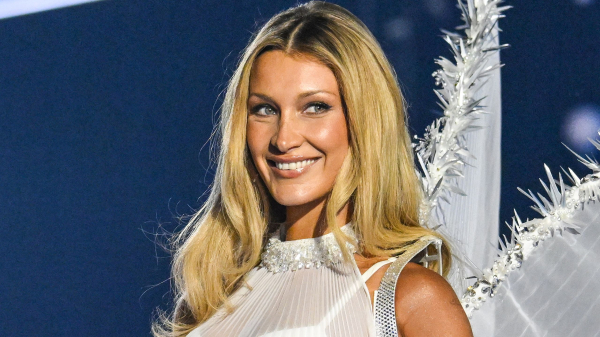
    Bella Hadid smiles in a sheer white dress with angel wings. Her blonde hair is worn long and loose.Getty ImagesSave StorySave this storySave StorySave this story

    Brr! Is that the chill of a winter wind in the air, or is it just Bella Hadid's snow-queen makeup? Now that we're officially in November, winter weather isn't far away, and the model got a head start with the cutest frosty freckles we've seen, well, ever.

    Hadid's frosty glam wasn't for a Halloween costume, though it definitely could have been; instead, the model teased “something cozy” to come from her fragrance brand Orebella. She paired her enormous fluffy white faux-fur trapper hat with Queen Elsa-style makeup, with white flakes of pigment dusted over her lashline, just like how snowflakes get stuck to your eyelashes during a flurry. The same frosty, lifelike texture was applied across the bridge of her nose to resemble freckles. The “snow” was also scattered all over her hat, in her hair, and across her skin, as though she was trapped in a particularly beautiful blizzard.

    Though Hadid was lightly dusted with a flurry of faux-snow, the rest of her glam looked more like she'd been spending time on the beach in Tahiti. Her beach-babe glow was highlighted by bronzed cheeks and a taupe eye shadow with a pearly shade brushed under the brow for definition, plus a teeny bit of black eyeliner to emphasize her pale blue-green eyes. Her lips were frosted with a sheen of seashell pink, which manages to be both wintry and summery at the same time.

    Instagram content

    We're not saying you should cover yourself in fake snow for winter parties and nights out, but you can take a cue from Hadid's frosted glam, even sans the snow freckles. Frosted lips and eyes have returned to the beauty forefront in a huge way, thanks in part to TikTok and exciting relaunches like MAC's Frost lipsticks. For another fun twist on ice-queen glam, take a cue from Zara Larsson and pile on the shimmery silver-white shadow accented with rhinestones in lieu of snowflakes, or perhaps a fresh platinum blonde hair color à la Serena Williams. “Cool” doesn't even begin to describe it!

  • 7 Best Retinol Creams for Fine Lines, Wrinkles, and Uneven Texture

    7 Best Retinol Creams for Fine Lines, Wrinkles, and Uneven Texture

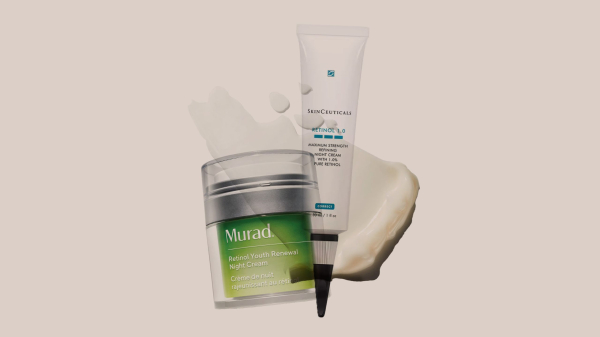
    Image contains a collage of silos of the best retinol creams on an offwhite backgroundCollage: Jemeria Davison; Source images: Courtesy of brandsSave StorySave this storySave StorySave this story

    The best retinol creams can be skin-care godsends, whether you’re struggling with acne, fine lines, dark spots, drooping, dullness, or large pores. If you’re not hip to retinoids—the catchall term that refers to all vitamin A derivatives, including retinol—we’ll give you a crash course. "[Retinol] can help stimulate cell turnover as well as help stimulate collagen production," Ron Robinson, a New York City-based cosmetic chemist and founder of BeautyStat, previously told Allure. This allows the active ingredient to unclog pores, minimize the look of wrinkles, and improve your skin’s elasticity all at once. In other words, adding retinol can be a smart way to give your skin-care routine a boost—helping with common goals like smoother texture and a more even tone.

    Not sure whether to grab a cream or a serum? Think of serums as the more potent, fast-absorbing option, while creams provide an extra hit of moisture and tend to play nicely with sensitive skin. It really just depends on what your skin can handle (and what it needs most).”

    Our Top Retinol Creams

    • Best Overall: Alastin Skincare Renewal Retinol 0.25, $81
    • Best Retinal: Eau Thermale Avène RetrinAL 0.1 Intensive Cream, $68
    • Best for Advanced Users: SkinCeuticals Retinol 1.0, $102
    • Best Night Cream: Revision Skincare D·E·J Night Face Cream, $190

    Frequently Asked QuestionsAccordionItemContainerButtonLargeChevron

    • What is retinol?
    • How should I use retinol?
    • Will retinol irritate my skin?
    • What are retinol alternatives?
    • Meet the experts
    • How we test and review products
    • Our staff and testers

    Most dermatologists recommend starting with retinol just once or twice a week to help your skin build tolerance, then slowly working up to every other night or nightly as your skin adjusts. Always follow with moisturizer and wear broad-spectrum SPF daily, since retinoids can make skin more sun-sensitive. Start with one of our expert-approved favorites below.

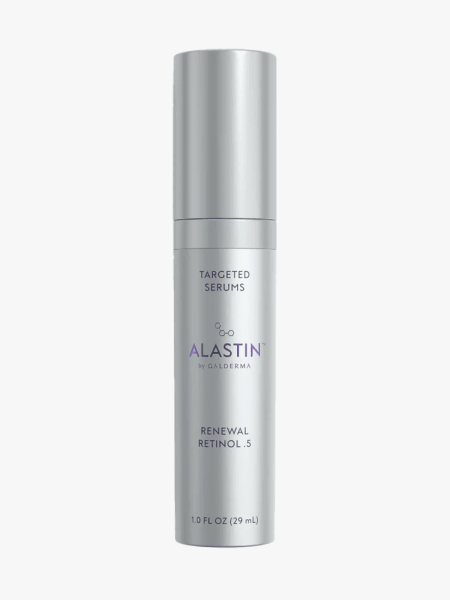
    Best Overall: Alastin Skincare Renewal Retinol 0.25

    Alastin Skincare Renewal Retinol 0.25 in branded component on a light gray backgroundSave to wishlistSave to wishlist

    Alastin Skincare

    Renewal Retinol 0.25

    $81

    Amazon

    $81

    Shop

    Why it's worth it: What makes Alastin Skincare’s Renewal Retinol 0.25 stand out is its lipid-encapsulated form of retinol, meaning it supplements the active ingredient’s tone- and texture-evening effects with moisturizing lipids (ceramides, specifically). To double down on its soothing, no-sting claims, this retinol treatment is spiked with two skin-calming favorites: oat extract and silver mushroom, the latter of which also has hydrating properties that give hyaluronic acid a run for its money. It contains a low dose of 0.25% encapsulated retinol, but those who are advanced retinol users can opt for the higher-strength 0.5% formula.

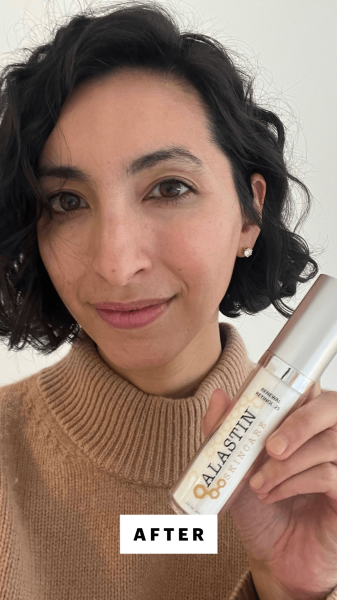
    Allure contributing commerce editor Deanna Pai applying the Alastin Skincare Renewal Retinol 0.25

    Deanna PaiAllure contributing commerce editor Deanna Pai after applying the Alastin Skincare Renewal Retinol 0.25

    Pai after applying the Alastin Skincare Renewal Retinol 0.25

    Deanna Pai

    Tester feedback from contributing commerce editor Deanna Pai

    AccordionItemContainerButtonLargeChevron

    “I was able to use this with no acclimation period—gasp!—which is a big deal, since I’ve experienced the retinol-newbie flakes as an over-confident 20-something. It’s never once irritated my skin, even on the coldest of winter days, and while I still get the occasional hormonal breakout, I’ve found that this dispatches zits and the requisite acne scars more quickly.” —Deanna Pai, contributing commerce editor

    More to know

    AccordionItemContainerButtonLargeChevron

    • Retinol concentration: 0.25% or 0.5%
    • Other key ingredients: oat extract, ceramides, silver mushroom
    • Fragrance-free: yes

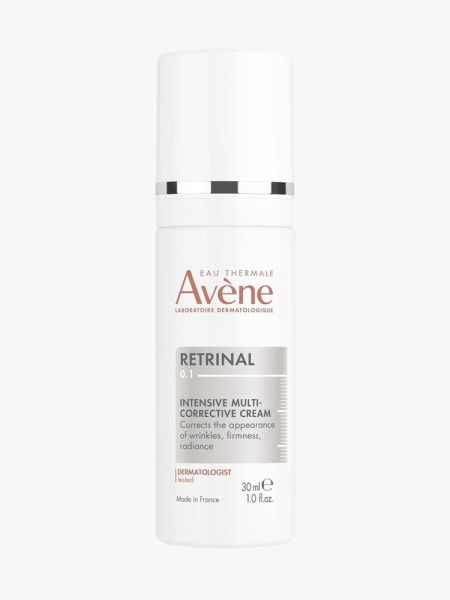
    Best Retinal: Eau Thermale Avène RetrinAL 0.1 Intensive Cream

    Eau Thermale Avene RetrinAL 0.1 Intensive Cream in branded component on a light gray backgroundSave to wishlistSave to wishlist

    Eau Thermale Avène

    RetrinaL 0.1 Intensive Cream

    $68

    Amazon

    $68

    Dermstore

    $68

    Ulta Beauty

    Why it's worth it: ICYMI, that's retinal, with an “a”—and it's actually more potent than retinol. Eau Thermale Avène's RetrinAL 0.1 Intensive Cream contains 0.1% retinaldehyde (commonly called retinal), a vitamin A derivative that works similarly to retinol but can deliver results faster. “Retinal is one step closer to becoming retinoic acid, which is the active form that binds to receptors in your skin to stimulate collagen production and skin cell turnover,” Asmi Berry, DO, a board-certified dermatologist in Los Angeles, previously told Allure. In other words, your skin has one less step to go through, making retinal particularly effective at smoothing fine lines, improving texture, and evening out skin tone.

    To help keep dryness and irritation in check, the formula pairs Avène's signature thermal spring water, known for its soothing properties, with plenty of moisturizing ingredients. Glycerin and sodium hyaluronate (a form of hyaluronic acid) draw water into the skin, while squalane, shea butter, and safflower seed oil soften skin and help seal in moisture. Niacinamide also supports the skin barrier and improves uneven tone, while antioxidant-rich vitamin E helps protect against free-radical damage. (Still, because retinal is more potent than retinol, ease into using it, especially if your skin is sensitive.)

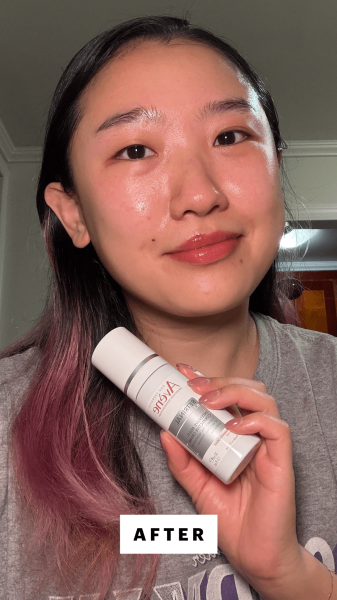
    Allure commerce editor Sarah Han applying the Eau Thermale Avène RetrinAL 0.1 Intensive Cream

    Sarah HanAllure commerce editor Sarah Han after applying the Eau Thermale Avène RetrinAL 0.1 Intensive Cream

    Han after applying the Eau Thermale Avène RetrinAL 0.1 Intensive Cream

    Sarah Han

    Tester feedback from commerce editor Sarah Han

    AccordionItemContainerButtonLargeChevron

    “As a 33-year-old person, I'm a retinol stan. I have yet to try prescription tret (though I'm being somewhat swayed by coworkers), so I've been experimenting with OTC retinoids up the wazoo. While I usually reach for a retinal serum, on days my skin is feeling drier or more sensitized, I'll swap my retinal for a hydrating serum and use the Avène Retrinal 0.1 Intensive Multi-Corrective Cream as a milder form of getting in my vitamin A. The cream is quite lightweight (I don't love rich creams) and blends in easily—but, most importantly, it's easy on my skin, thanks to hyaluronic acid and the brand's signature thermal spring water. It'll be an especially good winter moisturizer but, again, lightweight enough to work all year round.” —Sarah Han, commerce editor

    More to know

    AccordionItemContainerButtonLargeChevron

    • Retinol concentration: 0.1% retinal
    • Other key ingredients: vitamin E, Avène thermal spring water, glycerin, sodium hyaluronate, squalane, shea butter, safflower seed oil, niacinamide
    • Fragrance-free: yes

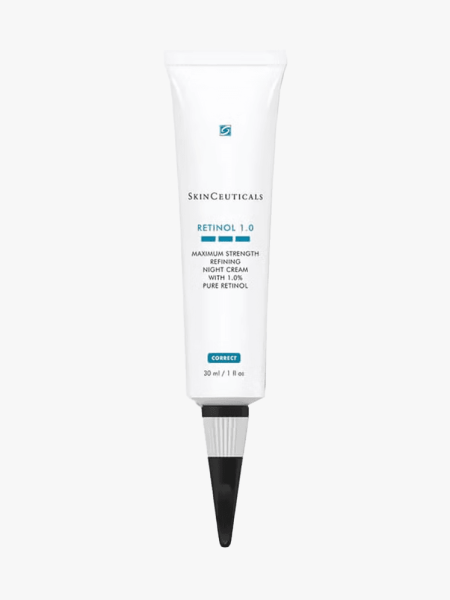
    Best for Advanced Users: SkinCeuticals Retinol 1.0

    SkinCeuticals Retinol 1.0 in branded component on a light gray backgroundSave to wishlistSave to wishlist

    SkinCeuticals

    Retinol 1.0

    $102

    SkinCeuticals

    $102

    Dermstore

    $102

    Bluemercury

    Allure contributor Marci Robin applying the SkinCeuticals Retinol 1.0

    Marci Robin

    Why it's worth it: While anyone (with the budget) can slather on SkinCeuticals products, those with more mature skin can benefit the most from its lineup of science-backed formulas. Case in point: Retinol 1.0, which the brand literally bills as a "retinol face cream for advanced users." This higher concentration means more effective skin cell turnover and smoother, clearer skin. To counteract any irritation or redness, there's a calming blend of bisabolol (derived from chamomile) and boswellia serrata extract (derived from frankincense).

    If you’re just starting off with retinol, go with Retinol 0.3, a beginner-friendly concentration that is gentler on the skin before advancing to Retinol 0.5, and finally Retinol 1.0.

    Tester feedback from contributor Marci Robin

    AccordionItemContainerButtonLargeChevron

    "I've been using retinol on and off for a good 15 years in my pursuit of smoother and more even skin, so I can comfortably use SkinCeuticals' highest concentration of the gold-standard cell-turner-overer (not a word, but go with it). The bisabolol in the formula definitely helps soothe any irritation, too." —Marci Robin, contributor

    More to know

    AccordionItemContainerButtonLargeChevron

    • Retinol concentration: 0.3%, 0.5%, or 1%
    • Other key ingredients: bisabolol, boswellia serrata extract
    • Fragrance-free: yes

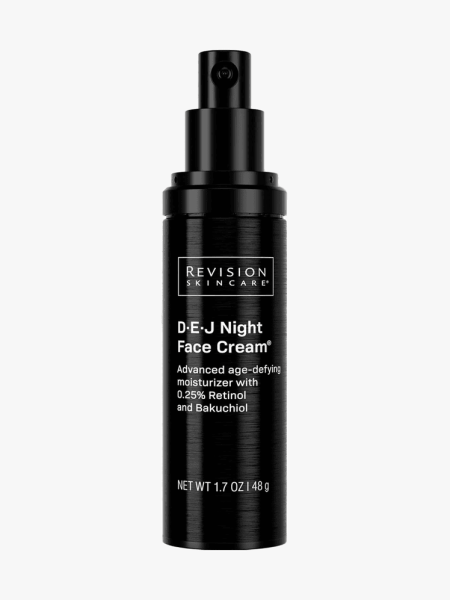
    Best Night Cream: Revision Skincare D·E·J Night Face Cream

    Revision Skincare D·E·J Night Face Cream in branded component on a light gray backgroundSave to wishlistSave to wishlist

    Revision Skincare

    D·E·J Night Face Cream

    $190

    Amazon

    $190

    Shop

    $190

    Dermstore

    Pai applying the Revision Skincare D·E·J Night Face Cream

    Deanna Pai

    Why it's worth it: Retinol and bakuchiol (a gentler, plant-based ingredient that has a similar effect on skin) are showing up together in more and more skin-care formulas, and Revision Skincare’s D·E·J Night Face Cream is a good example of why they make such a great pair. Retinol takes the lead in smoothing fine lines and uneven texture, while bakuchiol adds antioxidant and skin-smoothing benefits without necessarily increasing irritation. The cream contains 0.25% time-released retinol, making it another “approachable option for retinol beginners,” says Nazanin Saedi, MD, a board-certified dermatologist based in East Norriton, Pennsylvania. Instead of delivering all the retinol at once, the formula releases it gradually, which can help reduce the dryness, redness, and irritation that sometimes come with starting retinol.

    Retinol and bakuchiol aren't the only ingredients doing your skin favors here. The night cream also contains a form of vitamin C called tetrahexyldecyl ascorbate to brighten dullness and even out skin tone, plus sodium hyaluronate and glycerin to draw in moisture. To further nourish skin, squalane, ceramides, and cholesterol support the skin barrier and help lock in hydration, reducing the likelihood of dry patches and peeling as your skin adjusts to retinol.

    Tester feedback from Pai

    AccordionItemContainerButtonLargeChevron

    “I've recently started using this retinoid at night—having heard a million dermatologists recommend it—and so far, it cannot be beat. It doesn't cause any irritation or dryness, and is creamy enough for my combination skin that I can skip moisturizer. It's faded some of my hyperpigmentation, and while I haven't seen a difference in my fine lines just yet, I'm optimistic.” —Deanna Pai, contributing commerce editor

    More to know

    AccordionItemContainerButtonLargeChevron

    • Retinol concentration: 0.25% time-released retinol
    • Other key ingredients: bakuchiol, tetrahexyldecyl ascorbate (vitamin C), peptides, sodium hyaluronate, squalane, ceramides, cholesterol
    • Fragrance-free: yes

    More retinol creams we like

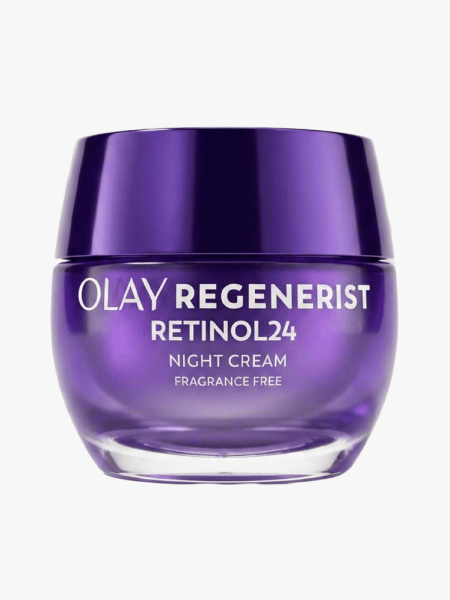
    Best Drugstore: Olay Regenerist Retinol 24 + Peptide Night Face Moisturizer

    Olay Regenerist Retinol 24 + Peptide Night Face Moisturizer in branded component on a light gray backgroundSave to wishlistSave to wishlist

    Olay

    Regenerist Retinol 24 + Peptide Night Face Moisturizer

    $30

    Amazon

    Why it's worth it: If you're dealing with dark spots, fine lines, and uneven texture, the Olay Regenerist Retinol 24 + Peptide Night Face Moisturizer tackles all three without requiring separate products. “For discoloration and uneven tone, I prefer a night cream like this one that includes ingredients capable of supporting cell turnover rather than relying on hydration alone,” says Anetta Reszko, MD, a board-certified dermatologist based in New York City.

    The formula contains two forms of vitamin A: retinol, which helps speed up skin cell turnover to gradually fade discoloration and smooth rough patches, and retinyl propionate, a retinol derivative that's generally considered gentler because it needs to go through additional steps before your skin can use it. Together, they help address uneven tone and texture, while niacinamide helps brighten and support the skin barrier. Peptides help improve the look of fine lines and firmness, and glycerin draws in moisture.

    Although it's fragrance-free, the brand doesn't disclose the retinol percentage, so it's hard to know how just potent the formula is. If you're new to retinol or have sensitive skin, start with two to three nights a week and gradually work your way up to nightly use as your skin adjusts.

    More to know

    AccordionItemContainerButtonLargeChevron

    • Retinol concentration: retinol and retinyl propionate (percentage undisclosed)
    • Other key ingredients: niacinamide, peptides, glycerin, dimethicone
    • Fragrance-free: yes

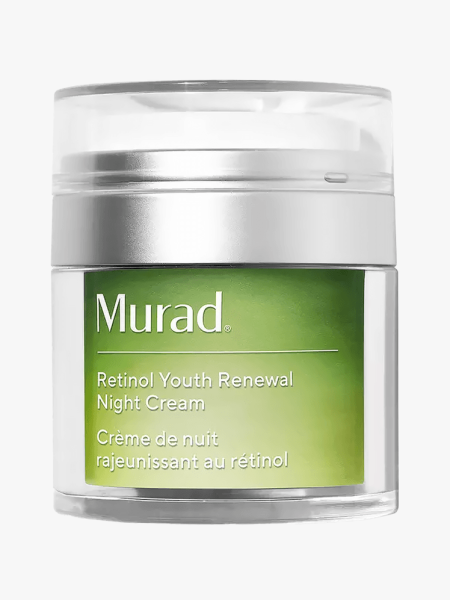
    Best for Dry Skin: Murad Retinol Youth Renewal Night Cream

    Murad Retinol Youth Renewal Night Cream in clear jar with silver accents on a light gray backgroundSave to wishlistSave to wishlist

    Murad

    Retinol Youth Renewal Night Cream

    $94

    Amazon

    $94

    Nordstrom

    $94

    Shop

    Why it's worth it: To tackle thinning, crepey skin, Murad’s Retinol Youth Renewal Night Cream doesn't rely on just one type of retinoid. It instead contains three: retinol, retinyl linoleate (a gentler vitamin A derivative), and hydroxypinacolone retinoate (a retinoid that can bind directly to retinoid receptors in the skin). Together, they help encourage skin cell turnover for smoother, more even-looking skin.

    “This is one of my favorite options for patients who want visible improvement in crepey skin texture and firmness,” says Alexandra Bowles, MD, board-certified dermatologist based in Cincinnati, OH. “The formula's time-release technology also delivers retinol gradually to help minimize irritation,” she says. The cream has plenty of moisturizing ingredients to balance things out, including hyaluronic acid and glycerin to draw in water, squalane to soften skin, and niacinamide to support the skin barrier.

    More to know

    AccordionItemContainerButtonLargeChevron

    • Retinol concentration: retinol, retinyl linoleate, hydroxypinacolone retinoate
    • Other key ingredients: hyaluronic acid, glycerin, squalane, niacinamide
    • Fragrance-free: no

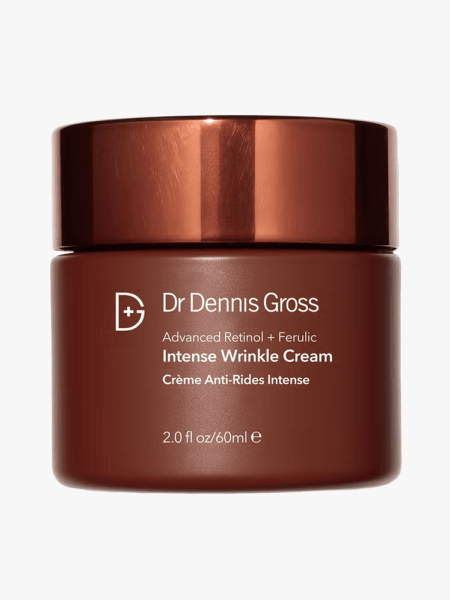
    Best for Mature Skin: Dr. Dennis Gross Intense Wrinkle Cream

    Dr. Dennis Gross Intense Wrinkle Cream in branded tub component on a light gray backgroundSave to wishlistSave to wishlist

    Dr. Dennis Gross

    Intense Wrinkle Cream

    $82

    Amazon

    $82

    Nordstrom

    $82

    Dermstore

    Why it's worth it: Chasing quick results? Dr. Dennis Gross’s Intense Wrinkle Cream targets fine lines, wrinkles, and uneven tone with visible improvements in as little as two weeks. Powered by the brand’s Phyto-Retinol Blend, it combines trans-retinol (the classic form your skin readily converts to retinoic acid) with encapsulated retinol that releases gradually for a gentler, less irritating boost. “It also features bakuchiol, a plant-based retinol alternative, to tackle fine lines and boost collagen for a more even tone and texture,” says Corey L. Hartman, MD, a board-certified dermatologist based in Birmingham, Alabama. The rich formula is ideal for dry or mature skin, though oily or acne-prone types may find it a bit heavy, notes Dr. Hartman.

    More to know

    AccordionItemContainerButtonLargeChevron

    • Retinol concentration: not disclosed
    • Other key ingredients: bakuchiol, ferulic acid, rambutan=
    • Fragrance-free: yes

    Frequently Asked Questions

    What is retinol?

    Retinol is a transformative skin-care ingredient also known as pure vitamin A. Retinol is a retinoid—the catch-all term for these A-based formulas, over-the-counter (OTC) and prescription varieties alike, like tretinoin. (Adapalene is the only prescription-level retinoid available over the counter—Differin Gel Adapalene Gel 0.1% is a popular option.) This active vitamin A binds to receptors, helping them function better and increasing cell turnover and collagen production. This can translate into many benefits, like more balanced pigment production for fewer dark spots, smoother skin, and tighter-looking pores.

    "The increase in cell turnover helps unclog pores," Sheila Farhang, MD, a board-certified dermatologist based in Tucson, Arizona, previously explained. "This also helps decrease the appearance of brown or red post-acne spots—post-inflammatory hyperpigmentation—as well as help collagen synthesis for acne scarring," Dr. Farhang added.

    How should I use retinol?

    "When it comes to a retinol cream, it's important to know what percentage of retinol is included in the formula to determine if the product is actually going to deliver all the glorious benefits vitamin A has," says David Kim, MD, a board-certified dermatologist based in New York City. "Studies have shown that retinol is about 10 times less potent than prescription-strength retinoic acid, so I usually recommend products with at least 0.25% retinol."

    First-time users should start by using retinol once or twice a week, gradually increasing to every other day—if your skin can handle it, you can bump up to nightly use. No matter how often you use it, you may have a brief adjustment period with some irritation, which is normal.

    Over-the-counter vitamin A formulations, like those with retinol and retinaldehyde (often shortened to retinal), tend to be weaker because the skin has to convert them to retinoic acid before they can take full effect. With any retinoid, especially if you have sensitive skin, practice restraint and apply a pea-sized drop only one or two nights a week until your skin acclimates.

    According to Chicago-based dermatologist Caroline Robinson, MD, it's best not to mix retinol with benzoyl peroxide. When used together, they can cancel each other out, which means neither works as well as it should. Still, you can separate them: use benzoyl peroxide in the morning and reserve retinol for nighttime. Similarly, if you want to use both vitamin C and retinol in your skin-care routine, use vitamin C during the day and retinol at night.

    Other no-nos? Mixing retinol with alpha-hydroxy acids (AHAs) and beta-hydroxy acids (BHAs) will result in major irritation and barrier disruption. Dermatologists recommend alternating the days you use AHA and retinol, or replacing salicylic acid with peptides—the latter enhances the penetration of retinol.

    Will retinol irritate my skin?

    Everyone’s skin reacts differently to retinol, but as a guideline, New York City-based board-certified dermatologist Hadley King, MD, reminds us that some degree of irritation—like dryness, peeling, redness, flaking, and burning—can be anticipated and should subside by the fourth week. You can also buffer your retinoids with a dollop of anti-inflammatory serum or lotion—ideally, formulas spiked with niacinamide, polyphenols, lipids, and ceramides.

    It’s also key to start your retinol journey with a lower-potency option. "Look for [something] like retinyl propionate, as it's much milder on the skin as compared to pure retinol," Joshua Zeichner, MD, a board-certified dermatologist based in New York City, previously told Allure. "You can think of it as an entry-level version."

    What are retinol alternatives?

    If you have sensitive skin, are pregnant and/or breastfeeding, or simply don't want to deal with this active's side effects (stinging, flaking, and skin purging, to name a few), you can consider the retinol alternatives explained below.

    Bakuchiol

    Bakuchiol is the most well-known retinol alternative out there for its gentler profile and impressive fine line-smoothing results. "Bakuchiol, like retinol, works by increasing cell turnover, thereby stimulating collagen production and diminishing wrinkles, skin laxity, and overall photo-damage," Ellen Marmur, MD, a New York City-based board-certified dermatologist, previously told Allure, without the sting commonly associated with retinoids.

    Niacinamide

    If discoloration is your concern, niacinamide is the antioxidant for you. "Niacinamide works with your skin's natural chemistry to improve overall skin texture by rebuilding a lipid layer, minimizing the appearance of pores, and preventing UV damage and inflammation as an antioxidant," Seattle-based board-certified dermatologist Brandith Irwin, MD, previously told Allure. Also known as vitamin B3, this powerhouse ingredient evens skin tone, minimizes redness, and reduces inflammation.

    Peptides

    Last but certainly not least are peptides, a must-have for diminishing the look of wrinkles and firming up sagging skin. Dr. Kim previously told Allure that peptides are designed to boost and replenish amino acids, the building blocks of collagen production. Often recommended for mature skin, peptides can help reduce the appearance of fine lines and leave skin looking tighter.

    Meet the experts

    • Alexandra Bowles, MD, board-certified dermatologist at MONA Dermatology based in Cincinnati, Ohio
    • Sheila Farhang, MD, a board-certified dermatologist and founder of Avant Dermatology & Aesthetics, based in Tucson, Arizona
    • Corey L. Hartman, MD, a board-certified dermatologist and founder of Skin Wellness Dermatology, based in Birmingham, Alabama
    • Brandith Irwin, MD, a board-certified dermatologist, based in Seattle, Washington
    • David Kim, MD, a board-certified dermatologist and founder of Soho Dermatology, based in New York City
    • Hadley King, MD, a board-certified dermatologist, based in New York City
    • Anetta Reszko, MD, a board-certified dermatologist based in New York City
    • Ron Robinson, a cosmetic chemist and founder of Beauty Stat based in New York City
    • Joshua Zeichner, MD, a board-certified dermatologist and director of cosmetic and clinical research in dermatology at Mount Sinai Hospital, based in New York City

    How we test and review products

    When Allure tests a product, our editors look at it from every angle in an effort to best serve you. We review ingredients, scrutinize brand claims, and, when necessary, examine peer-reviewed scientific and medical studies. In addition to testing each and every product that's included in each and every review, we rely on experts who shape their fields, including dermatology, cosmetic chemistry, and medicine, to help us vet the ingredients and formulas.

    For our list of the best retinol creams, we considered each product's performance across five primary categories: product ingredients and efficacy, packaging, fragrance, texture, and product wear. Every product was determined to have excelled in each category by our editorial team, which is composed of in-house writers and editors as well as contributors—along with special consideration from board-certified dermatologists. To learn more information on our reporting and testing processes, read our complete reviews process and methodology page.

    Our staff and testers

    A beauty product is a personal purchase. You might be searching for a face cream to address persistent dryness or a new nail product to add to your Sunday self-care routine; you may simply be browsing around for the latest launches to hit the hair market. No matter what you seek or your individual needs and concerns, Allure wants to ensure that you love anything we recommend in our stories. We believe that having a diverse team of writers and editors—in addition to the wide range of outside testers and industry experts we regularly call upon—is essential to reaching that goal.

    After all, can we really say a skin-care product is the "best" for people over 50 if the only testers we've solicited opinions from folks who have yet to hit 30? Can we honestly deem a high-end diffuser worthy of your hard-earned cash if it’s never been tested on curls? We're proud that our staff spans a wide range of ages, skin tones, hair textures, genders, and backgrounds, which means that we are able to fairly assess any beauty product that comes into the beauty closet.

  • Gen X Legends Brandy and Monica Show Gen Z How to Really Wear a Middle Part

    Gen X Legends Brandy and Monica Show Gen Z How to Really Wear a Middle Part

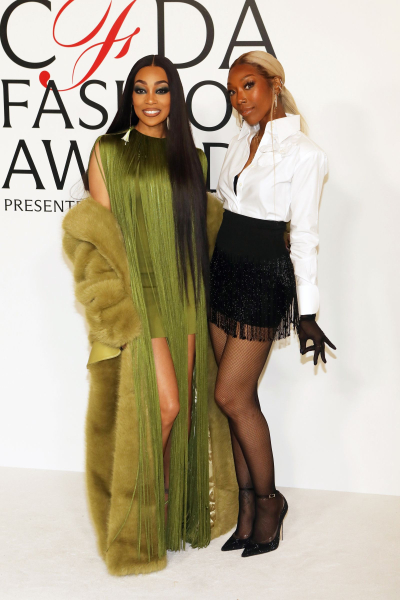
    Monica and Brandy together on a red carpet illustrating a story about their joint appearance at the 2026 CFDA awards.Photo: Getty ImagesSave StorySave this storySave StorySave this story

    In the 90s, there was some confusion on who “the boy” belonged to. But as of last night, Brandy Norwood and Monica Arnold have no problem sharing. The two attended the 2026 CFDA Fashion Awards on Monday flanking stylist Law Roach. Even without the famed stylist, the duo posed together warmly, signaling a healed sisterhood, creative alignment, and professional reunion.

    The Grammy Award winners wore editorial-leaning hairstyles that were sleek and lengthy. Arnold went with a bone-straight middle part that stopped at her upper thighs, while Norwood wore a platinum, middle-part ponytail that stopped mid-torso, done by hairstylist Nikkia Nelson. For makeup, Arnold wore a dramatic, forest-green smoky eye, with a nude lipstick and chestnut brown lip liner. Norwood, on the other hand, wore a soft glam that played to her naturally high cheekbones (accented with a vibrant blush, of course) from makeup artist Gaby Ramos Torell. On her eyes, she had a soft cut crease with a pale gold shimmer on her lids, along with a neat, nude glossy lip.

    Brandy and Monica together at the 2026 CFDA Awards.

    Monica and Brandy together at the 2026 CFDA Fashion Awards.

    Photo: Getty Images

    The two were competing teenage R&B queens throughout the ’90s, which is what makes the joint appearance so nice to see. They got three Grammy nominations and one win in 1999 for “The Boy is Mine,” a hit record that capitalized off of their beef. Though the actual song drama was fake, the industry friction between the two went on for decades, ending only in their 2025 reunion tour. Their musical reunion is what we always knew we needed, but the red carpet tag team took it to the next level.

    For more on current red carpet beauty, see:

    • Kim Kardashian's Semi-Halo Eyeliner Is Such a Pretty Way to Wear Subtle Shimmer
    • Marilyn Monroe Was on the Moodboard at the 2026 CFDA Awards
    • Hailey Bieber Is a Vision In Toasted Brown Tones

  • 9 Best Face Sunscreens 2026 for Healthy, Protected Skin

    9 Best Face Sunscreens 2026 for Healthy, Protected Skin

    Image contains a collage of Allure editors with the best face suncreens surrounded by silos of products on a gray backgroundCollage: Jemeria Davison; Source images: Courtesy of brandsSave StorySave this storySave StorySave this story

    Hands down, the most important product for healthier, clearer, and more radiant skin is one of the best face sunscreens, which you must wear every day, rain or shine. Despite limited sunscreen innovations in the US, we promise you there's a lightweight, comfortable-to-wear, pilling-free, and cast-free (for chemical sunscreens, specifically) formula on the market that you'll actually enjoy slathering on. And, of course, they all have broad-spectrum protection of SPF 30 or higher, as per dermatologist guidelines.

    In true Allure fashion, we're spilling everything you need to know about our team's favorite face sunscreens—many backed by board-certified dermatologists, to boot. These formulas glide on like a dream, never disrupt makeup, and above all else, help prevent sunburns, hyperpigmentation, and skin cancer with proper usage.

    Our Top Face Sunscreens

    • Best Mineral Overall: Alastin Skincare HydraTint Pro Mineral Sunscreen SPF 36, $84
    • Best Chemical Overall: La Roche-Posay Anthelios UVDefense SPF 50 Sunscreen with BEMT, $40
    • Best Lightweight: Colorescience Total Protection No-Show Mineral Sunscreen SPF 50, $48
    • Best Under Makeup: Peach & Lily Beam Blocker Invisible Sunscreen SPF 30, $34
    • Best for Dry Skin: Tatcha The Silk Sunscreen SPF 50, $64

    Frequently Asked QuestionsAccordionItemContainerButtonLargeChevron

    • How does sunscreen work?
    • What's the difference between mineral and chemical sunscreens?
    • Meet the experts
    • How we test and review products
    • Our staff and testers

    Best Mineral Overall: Alastin Skincare HydraTint Pro Mineral Sunscreen SPF 36
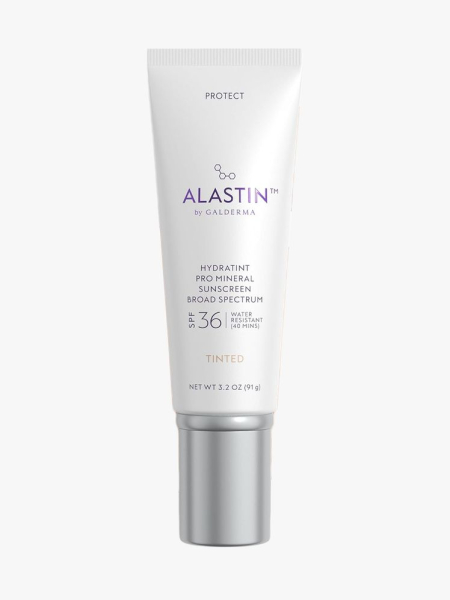
    Alastin Skincare HydraTint Pro Mineral Sunscreen SPF 36 in branded tube component on a light gray backgroundSave to wishlistSave to wishlist

    Alastin Skincare

    HydraTint Pro Mineral Sunscreen SPF 36

    $84

    Amazon

    $84

    Shop

    Allure contributing commerce editor Christa Joanna Lee applying the Alastin Skincare HydraTint Pro Mineral Sunscreen SPF 36

    Christa Joanna Lee

    Why it’s worth it: Originally designed for patients fresh off lasers, peels, or injectables, Alastin Skincare’s HydraTint Pro Mineral Sunscreen SPF 36 had to meet a few non-negotiables: be non-irritating, deeply hydrating, and—crucially—elegant enough that people would actually want to wear it every day. Check, check, and check. The formula relies on zinc oxide and titanium dioxide for broad-spectrum protection, while ectoin helps strengthen the skin barrier, retain hydration, and defend against environmental stress. “The tint blends easily for most skin tones, and you can even use it in lieu of foundation,” says May Hall, DO, a double board-certified dermatologist based in Asheville, North Carolina. (If you’re very fair, you might notice a slightly warm undertone.) It’s the kind of sunscreen you end up squeezing every last drop out of—post-procedure or not.
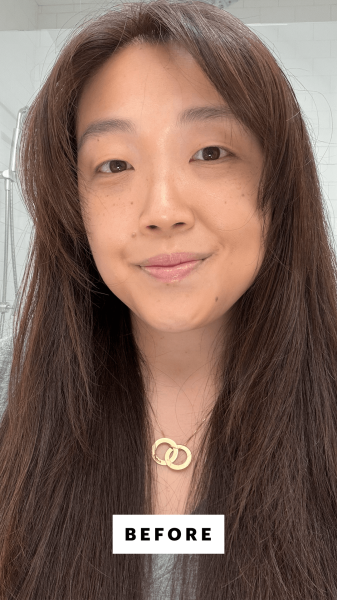
    Allure contributing commerce editor Christa Joanna Lee before applying the Alastin Skincare HydraTint Pro Mineral...

    Lee before applying the Alastin Skincare HydraTint Pro Mineral Sunscreen SPF 36

    Christa Joanna LeeAllure contributing commerce editor Christa Joanna Lee after applying the Alastin Skincare HydraTint Pro Mineral...
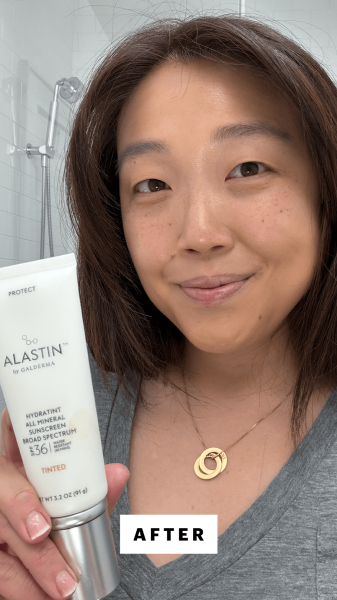
    Lee after applying the Alastin Skincare HydraTint Pro Mineral Sunscreen SPF 36

    Christa Joanna Lee

    Tester feedback from contributing commerce writer Christa Joanna Lee

    AccordionItemContainerButtonLargeChevron

    “As someone with sensitive and fair skin, I’m usually picky about mineral sunscreens, and I was a little hesitant that Alastin's Skincare HydraTint Pro Mineral Sunscreen SPF 36 only comes in one shade—but the tint is sheer enough to cancel out any chalkiness, yet it's sheer (I definitely wouldn't call it makeup). It blends in beautifully and absorbs quickly, leaving my skin looking even and calm. The only catch with tinted formulas is remembering to wash your hands after, but this one is so elegant it's surprisingly delightful to apply.” —Christa Joanna Lee, contributing commerce writer

    More to know

    AccordionItemContainerButtonLargeChevron

    • Type: mineral
    • Sunscreen filters: 3.4% zinc oxide, 8.9% titanium dioxide
    • Key ingredients: ectoin, phytoene, phytofluene
    • Tinted: yes
    • Water-resistant: no
    • Fragrance-free: yes

    Best Chemical Overall: La Roche-Posay Anthelios UVDefense SPF 50 Sunscreen with BEMT
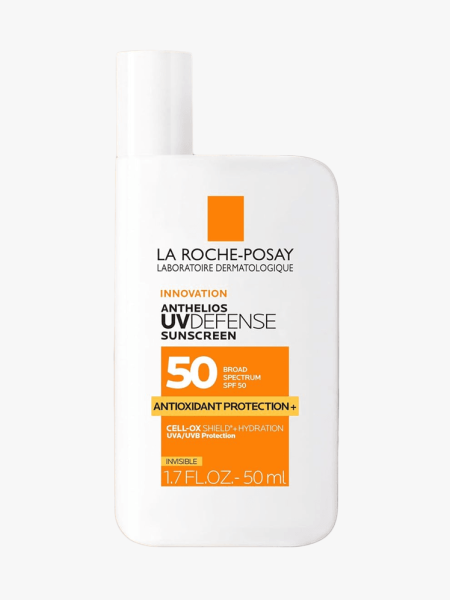
    La Roche-Posay Anthelios UVDefense SPF 50 Sunscreen with BEMT in branded component on a light gray backgroundSave to wishlistSave to wishlist

    La Roche-Posay

    Anthelios UVDefense SPF 50 Sunscreen with BEMT

    $40

    Amazon

    $40

    Ulta Beauty

    Why it’s worth it: A new sunscreen filter getting FDA approval is apparently a once-every-few-decades kind of event, so naturally, it’s a big deal. La Roche-Posay's Anthelios UVDefense SPF 50 Sunscreen is among the first to contain 2% bemotrizinol (BEMT), which protects against both UVA and UVB rays and stays stable in sunlight, so it doesn't break down when exposed to the sun. The formula also contains antioxidants to help protect against skin-damaging free radicals, plus glycerin, butylene glycol, and dimethicone to keep skin moisturized and feeling smooth.

    Of course, even the most impressive sunscreen formula won't do you much good if you don't actually want to wear it. Luckily, this one feels just as great as it sounds. "It's silky on the skin with no white residue," Jane Yoo, MD, a board-certified dermatologist based in New York City, previously told Allure. And even those with sensitive skin may get along with this formula. "BEMT is a partial exception for those with sensitive skin because it is a huge molecule and it sits on the skin so there is minimal absorption," says Dr. Yoo, who adds that the filter is considered safe for children ages six months and older.

    Allure commerce writer Tasha Nicole Smith applying the La Roche-Posay Anthelios UVDefense SPF 50 Sunscreen with BEMT

    Tasha Nicole SmithSmith after applying the La RochePosay Anthelios UVDefense SPF 50 Sunscreen with BEMT
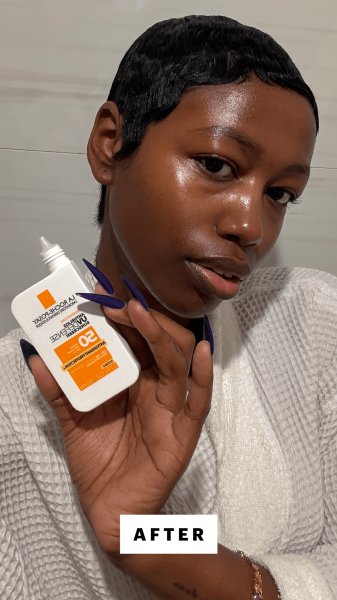
    Smith after applying the La Roche-Posay Anthelios UVDefense SPF 50 Sunscreen with BEMT

    Tasha Nicole Smith

    Tester feedback from commerce writer Tasha Nicole Smith

    AccordionItemContainerButtonLargeChevron

    “It’s been a long time since I’ve switched up my sunscreens but this one proved to be well worth it. The formula was hydrating but didn’t feel at all heavy on my skin. The texture was lightweight and a bit silkier than I’m used to, which gave me pause at first, but it actually ended up being quite hydrating. Even when I went to reapply throughout the day, I noticed that there was still a subtle glow to my skin, which is perfect as I love products that keep my dry skin looking glazed. It also didn’t cause any stinging or burning around my sensitive eyes. Definitely an SPF I’m excited to add to my rotation.” —Tasha Nicole Smith, commerce writer

    More to know

    AccordionItemContainerButtonLargeChevron

    • Type: chemical
    • Sunscreen filters: 2% BEMT, 3% avobenzone, 5% octisalate, 6% octocrylene, 11% homosalate
    • Key ingredients: Cell-Ox Shield technology (litchi extract, alteromonas, cassia senna alata, and vitamin E), glycerin, butylene glycol, dimethicone
    • Tinted: no
    • Water-resistant: no
    • Fragrance-free: yes

    Best Lightweight: Colorescience Total Protection No-Show Mineral Sunscreen SPF 50
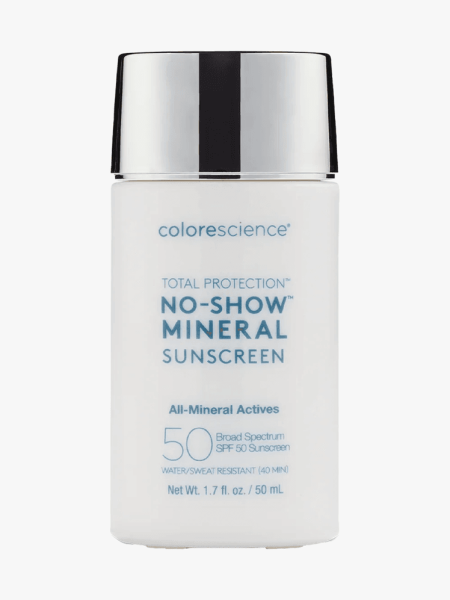
    Colorscience Total Protection No-Show Mineral Sunscreen SPF 50 in branded component on a light gray backgroundSave to wishlistSave to wishlist

    Colorscience

    Total Protection No-Show Mineral Sunscreen SPF 50

    $48

    Amazon

    $48

    Nordstrom

    $48

    Shop

    Allure commerce editor Madison San Miguel applying the Colorescience Total Protection No-Show Mineral Sunscreen SPF 50

    Madison San Miguel

    Why it’s worth it: Tinted sunscreens have their perks, especially when it comes to disguising that chalky residue zinc oxide can leave behind. But what if you don't want the extra color or have trouble finding a shade that matches your skin? Colorescience's Total Protection No-Show Mineral Sunscreen SPF 50 skips the pigment altogether—yet “it goes on sheer with zero white cast,” says Jane Yoo, MD, a dual board-certified dermatologist based in New York City. The formula also contains bisabolol and allantoin to soothe skin, plus antioxidants like sunflower sprout extract to help protect against environmental damage. And no matter your skin type, you'll appreciate the lightweight texture. “It feels like a silky moisturizer rather than a heavy zinc paste,” she says.

    Tester feedback from commerce editor Madison San Miguel

    AccordionItemContainerButtonLargeChevron

    “I'm stuck like glue to my Colorescience Face Shield Flex, so I rarely (emphasis on rarely) venture out to other formulas—this one might have me convinced to finally try something new. While it doesn't have a tinted base like my tried-and-true, the first thing I noticed was the extra dose of hydration it gave to my skin. The recent weather shift has made my complexion drier than usual, so my everyday moisturizer hasn't been cutting it to keep that 'tight' feeling away. This was the moisture boost I needed—and if your skin isn't as dry as a desert like mine, hey, this formula could go double duty in your routine. It's lightweight enough, too, so you don't feel like you're layering on another product, and it's oh-so seamless to blend. While I can't speak too much on the no white cast claim (my skin tone falls on the light-medium side), one thing I can vouch for: The glow it leaves behind deserves all of the applause." —Madison San Miguel, commerce editor

    More to know

    AccordionItemContainerButtonLargeChevron

    • Type: mineral
    • Sunscreen filters: 10% zinc oxide
    • Key ingredients: bisabolol, allantoin, sunflower sprout extract
    • Tinted: no
    • Water-resistant: 40 minutes
    • Fragrance-free: yes

    Best for Oily Skin: Ultra Violette Unblock Screen SPF 50
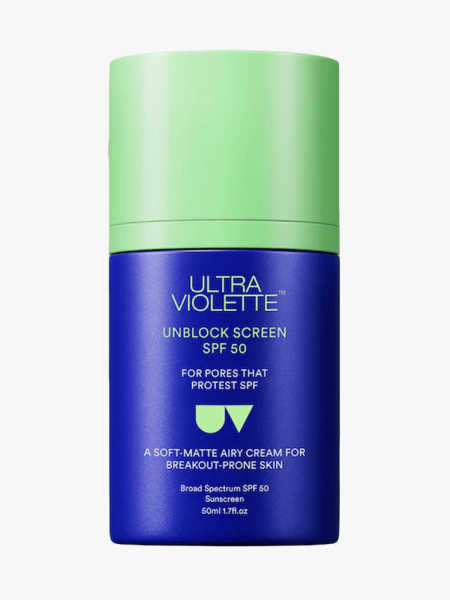
    Ultra Violette Unblock Screen SPF 50 Breakout-Friendly Skinscreen in branded component on a light gray backgroundSave to wishlistSave to wishlist

    Ultra Violette

    Unblock Screen SPF 50

    $40

    Sephora

    $40

    Ultra Violette

    Allure commerce editor Sarah Han applying the Ultra Violette Unblock Screen SPF 50

    Sarah Han

    Why it’s worth it: Ultra Violette was the first brand to bring bemotrizinol (BEMT) to a U.S. sunscreen, but that's not the only reason its Unblock Screen SPF 50 deserves attention—especially if you have oily skin. The formula pairs chemical filters BEMT and octocrylene with mineral zinc oxide, combining different types of UV filters for broad-spectrum protection without relying solely on zinc oxide, which can feel thick and leave a white cast.

    Plus, it has a sheer tint to help minimize any chalky residue. It also contains “skin-care ingredients for oily, acne-prone and reactive skin,” says Dr. Yoo. These include Bix'Activ, an ingredient derived from annatto seeds, which helps control oil and make pores look less noticeable, while silica absorbs excess sebum for a soft-matte finish. And because oily skin still needs moisture, Pentavitin (a sugar-derived hydrating ingredient) keeps skin comfortable without adding a greasy feel.
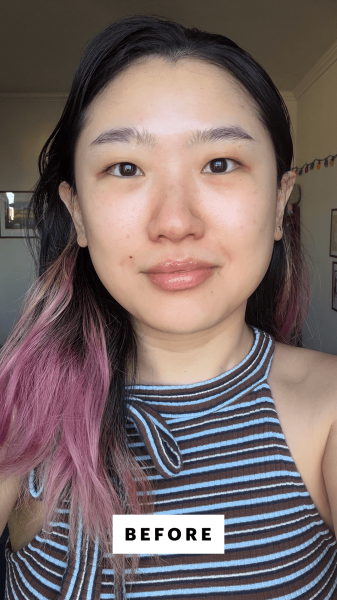
    Han before applying the Ultra Violette Unblock Screen SPF 50

    Han before applying the Ultra Violette Unblock Screen SPF 50

    Sarah HanHan after applying the Ultra Violette Unblock Screen SPF 50
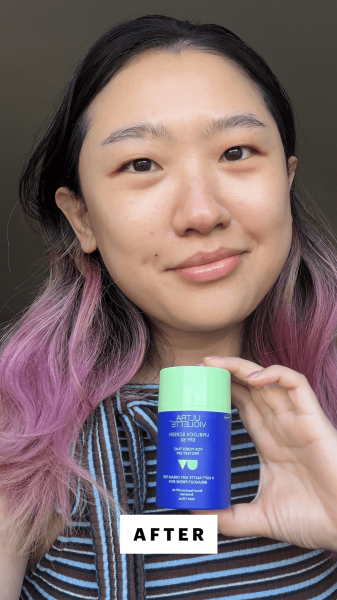
    Han after applying the Ultra Violette Unblock Screen SPF 50

    Sarah Han

    Tester feedback from commerce editor Sarah Han

    AccordionItemContainerButtonLargeChevron

    “My greasy T-zone and I have a fraught relationship. You see, I love dewy sunscreens, but my T-zone begs to differ—and, to prove its point, it shows off its blinding shine in the selfies I take for work. As a compromise, I've been on the hunt for sunscreens that leave a more natural, balanced finish. Ultra Violette's Unblock has been particularly buzzy as of late, since it's one of the first US sunscreens to launch with the new FDA-approved filter, BEMT. Paired with octocrylene and zinc oxide, this hybrid formula is quite elegant and offers a hint of tint that evens out my skin tone—perfect for days my usual concealer-only base won't quite cut it. I can't say I feel a huge difference compared to other hybrid sunscreens I've tried before, but I will say it feels slightly more lightweight than other tinted sunscreens I've tried—accordingly, it takes less time to blend in, so we love that. Just be sure to dispense more than one pump! I did two in the demo and then added a third off-camera! One pump is definitely not enough to account for the recommended 1/4 teaspoon for your face!” —Sarah Han, commerce editor

    More to know

    AccordionItemContainerButtonLargeChevron

    • Type: hybrid
    • Sunscreen filters: 3% bemotrizinol, 6% octocrylene, 10% zinc oxide
    • Key ingredients: Bix’Activ (annatto seed extract), Pentavitin (saccharide isomerate), silica
    • Tinted: yes
    • Water-resistant: not disclosed
    • Fragrance-free: yes

    Best for Dry Skin: Tatcha The Silk Sunscreen SPF 50
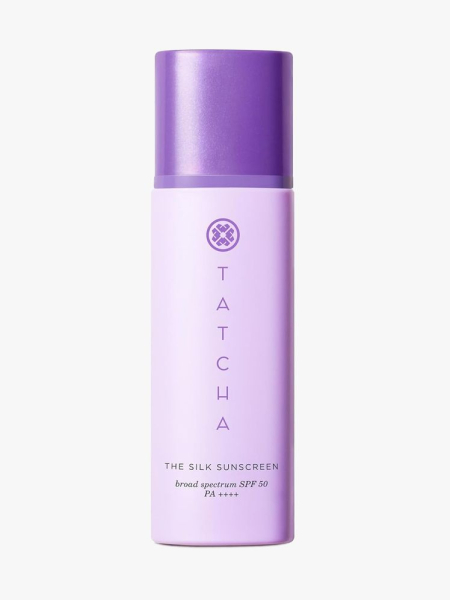
    Tatcha The Silk Sunscreen SPF 50 in branded componen ton a light gray backgroundSave to wishlistSave to wishlist

    Tatcha

    The Silk Sunscreen SPF 50

    $64

    Amazon

    $64

    Shop

    $64

    Ulta Beauty

    Allure former associate beauty editor Annie Blay-Tettey applying the Tatcha The Silk Sunscreen SPF 50

    Courtesy of Annie Blay-Tettey

    Why it’s worth it: Dry, flaky patches and chalky, matte sunscreen? Not exactly a match made in heaven. Tatcha's The Silk Sunscreen SPF 50 gives skin a little extra glow while keeping it moisturized, which a lightweight, liquid formula that uses 10% zinc oxide for mineral sun protection, plus hyaluronic acid to draw in moisture, squalane to soften skin, and niacinamide to even out skin tone. And true to its name, it contains silk extract, which helps give the sunscreen its smooth, almost primer-like feel. “Silk extract adds to a smooth, primer-like feel that makes dry skin look healthier and sits well under makeup,” says Dr. Yoo. It also has a sheer tint and radiant finish, making it a good option for days when you want to skip foundation. “I love to use this as my tinted makeup and just fly out the door in the mornings,” she says.
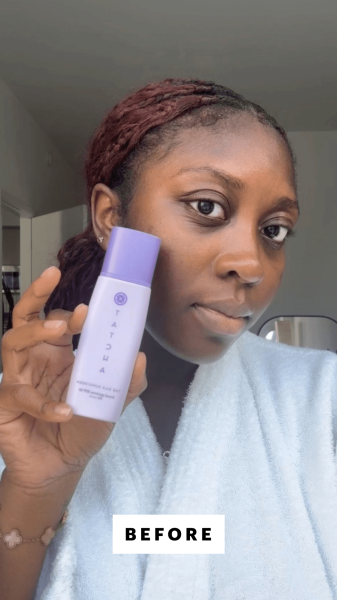
    Selfie of Annie BlayTettey before applying the Tatcha The Silk Sunscreen SPF 50

    Blay-Tettey before applying Tatcha The Silk Sunscreen SPF 50

    Annie Blay-TetteySelfie of Annie BlayTettey after applying the Tatcha The Silk Sunscreen SPF 50
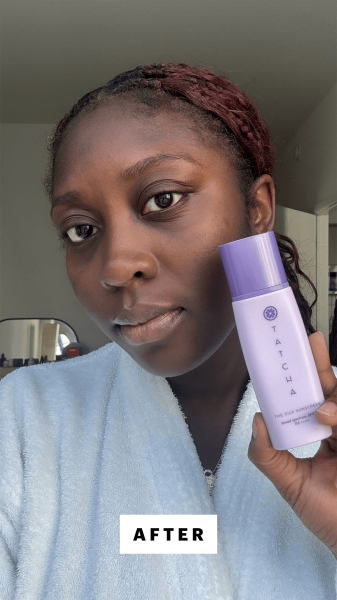
    Blay-Tettey after applying Tatcha The Silk Sunscreen SPF 50

    Annie Blay-Tettey

    Tester feedback from former associate beauty editor Annie Blay-Tettey

    AccordionItemContainerButtonLargeChevron

    "On a mother-daughter trip to Costa Rica, I noticed Tatcha’s The Silk Sunscreen SPF 50 in her toiletry bag and, out of curiosity, tried it myself. To my surprise, the liquid-y sunscreen blended into my skin, leaving nothing behind but sun protection and a light glow. The SPF initially applies a bit purple-ish, but after some rubbing, it completely blends into my skin." —Annie Blay-Tettey, former associate beauty editor

    More to know

    AccordionItemContainerButtonLargeChevron

    • Type: mineral
    • Sunscreen filters: 10% zinc oxide
    • Key ingredients: allantoin, hyaluronic acid, niacinamide, sericin, fibroin
    • Tinted: yes
    • Water-resistant: no
    • Fragrance-free: yes

    Best for Sensitive Skin: Shiseido Urban Environment Mineral Clear Sunscreen SPF 50
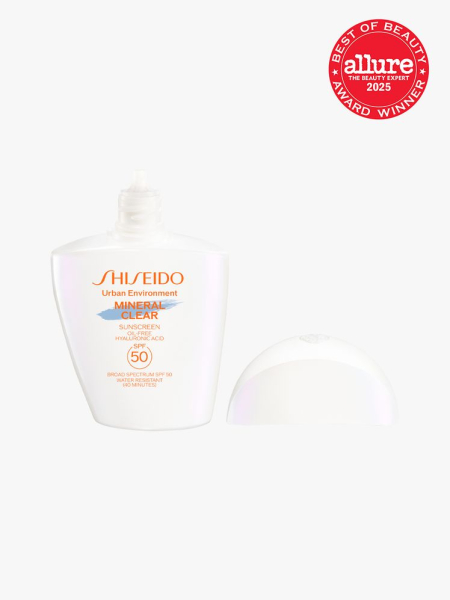
    Shiseido Urban Environment Mineral Clear Sunscreen SPF 50 in branded white bottle with cap on light gray background with red Allure Best of Beauty seal in the top right cornerSave to wishlistSave to wishlist

    Shiseido

    Urban Environment Mineral Clear Sunscreen SPF 50

    $39

    Nordstrom

    $39

    Ulta Beauty

    $39

    Sephora

    Why it’s worth it: If chemical sunscreens tend to irritate your skin, Shiseido's Urban Environment Mineral Clear Sunscreen SPF 50 might be a better match. It relies on two mineral filters, zinc oxide and titanium dioxide, for sun protection, but without the chalky finish you might expect. It also requires less rubbing and blending, which is always a plus when your skin is easily irritated: “It goes on sheer and blends to a clear finish,” says Dr. Yoo. The 2025 Best of Beauty Award winner also contains hyaluronic acid and glycerin to keep skin hydrated, plus vitamin E and ginkgo leaf extract to help protect against environmental damage. If redness is another concern, it includes dipotassium glycyrrhizate, a licorice-derived ingredient that calms irritation.

    Allure commerce market editor Sarah Hoffmann applying the Shiseido Urban Environment Mineral Clear Sunscreen SPF 50

    Sarah HoffmannAllure commerce market editor Sarah Hoffmann after applying the Shiseido Urban Environment Mineral Clear Sunscreen SPF 50
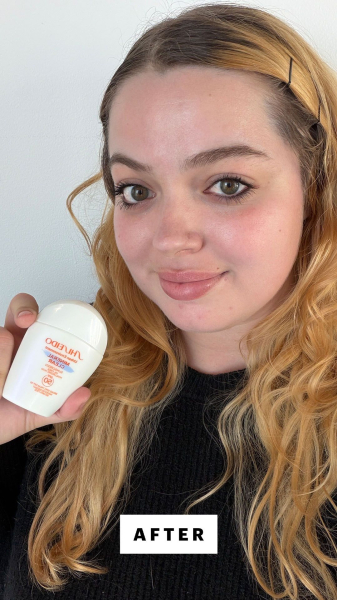
    Hoffmann after applying the Shiseido Urban Environment Mineral Clear Sunscreen SPF 50

    Sarah Hoffmann

    Tester feedback from commerce market editor Sarah Hoffmann

    AccordionItemContainerButtonLargeChevron

    “As with a lot of mineral sunscreens, this formal is a labor of blending love. It goes on very white at the start (especially if you're using the appropriate amount) but keep blending and you'll be able to get it to sheer out. On top of the protection it provides, the silky look it what makes this formula a winner in my book. It has a demi-matte finish, which makes it really lovely on skin prone to oiliness, but it's hydrating enough that it doesn't emphasize dry areas. Underrated element: It also makes an excellent makeup primer!” —Sarah Hoffmann, commerce market editor

    More to know

    AccordionItemContainerButtonLargeChevron

    • Type: mineral
    • Sunscreen filters: 4.5% titanium dioxide, 17.2% zinc oxide
    • Key ingredients: hyaluronic acid, glycerin, vitamin E, ginkgo leaf extract, dipotassium glycyrrhizate
    • Tinted: no
    • Water-resistant: 40 minutes
    • Fragrance-free: yes

    Best Under Makeup: Peach & Lily Beam Blocker Invisible Sunscreen
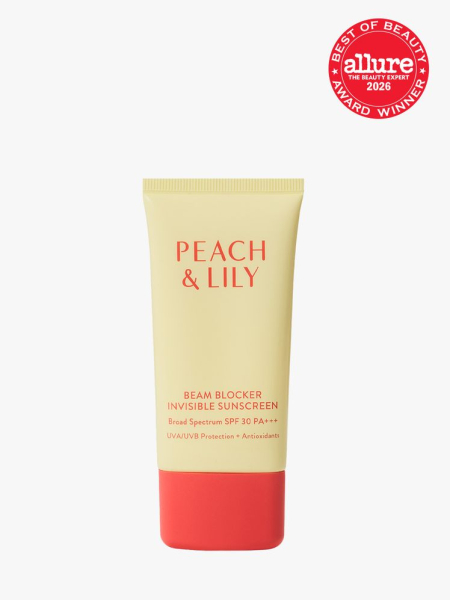
    Peach & Lily Beam Blocker Invisible Sunscreen in branded tube component on a light gray background with the 2026 best of beauty seal in the top right cornerSave to wishlistSave to wishlist

    Peach & Lily

    Beam Blocker Invisible Sunscreen

    $34

    Shop

    $34

    Ulta Beauty

    Allure beauty director Sarah Kinonen applying the Peach & Lily’s Beam Blocker Invisible Sunscreen

    Sarah Kinonen

    Why it’s worth it: Peach & Lily’s Beam Blocker Invisible Sunscreen is a fully chemical formula, so it goes on completely clear, but what sets it apart is how treatment-forward it is. You’re not just getting UV protection; you’re getting a full-on skin-care layer, with niacinamide to brighten, ceramides and panthenol to support the barrier, and a mix of hyaluronic acid forms to keep skin hydrated and bouncy. The Best of Beauty-winning formula doesn’t stop there: Ectoin supports environmental stress, bisabolol and Centella asiatica calm, and antioxidants like green tea and ferulic acid help defend against daily damage. Unlike some invisible sunscreens that start to pill the second you layer makeup on top, this one leaves a smooth, hydrated base—prepping skin like a primer while still feeling breathable and never greasy.
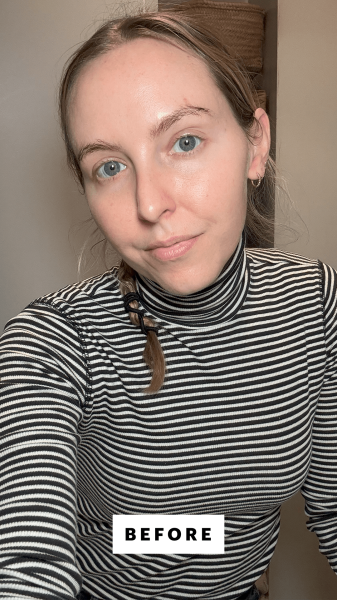
    Allure beauty director Sarah Kinonen before applying the Peach  Lilys Beam Blocker Invisible Sunscreen

    Kinonen before applying the Peach & Lily’s Beam Blocker Invisible Sunscreen

    Sarah KinonenAllure beauty director Sarah Kinonen after applying the Peach  Lilys Beam Blocker Invisible Sunscreen
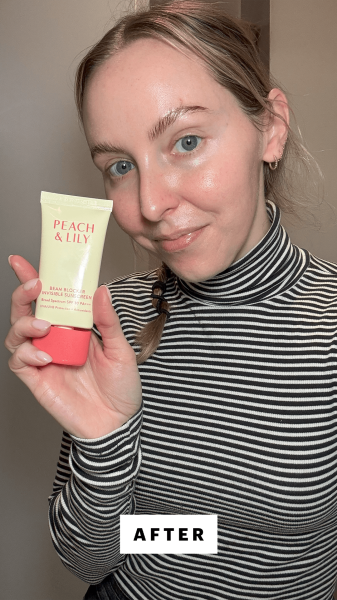
    Kinonen after applying the Peach & Lily’s Beam Blocker Invisible Sunscreen

    Sarah Kinonen

    Tester feedback from beauty director Sarah Kinonen

    AccordionItemContainerButtonLargeChevron

    “I use this sunscreen every day! I was obsessed after the first slathering of this stuff. It's lightweight, easily blendable, and doesn't irritate my eyes, which is a feat for a chemical sunscreen. (There's nothing worse than being mid-workout, trying to blink out the sting from the SPF sweat.) It also layers well under… everything. Foundation? Yep. Copious amount of liquid blush? Also yes. It never pills and isn't greasy or sticky, and most importantly, it doesn't irritate my easily inflamed skin. A true win!” —Sarah Kinonen, beauty director

    More to know

    AccordionItemContainerButtonLargeChevron

    • Sunscreen type: chemical
    • Key ingredients: 3% avobenzone, 7% homosalate, 5% octisalate, ceramides, panthenol, hyaluronic acid, ectoin, bisabolol, Centella asiatica, green tea, ferulic acid
    • Fragrance-free: yes

    Best for Dull Skin: Isdin Fusion Water Magic SPF 40
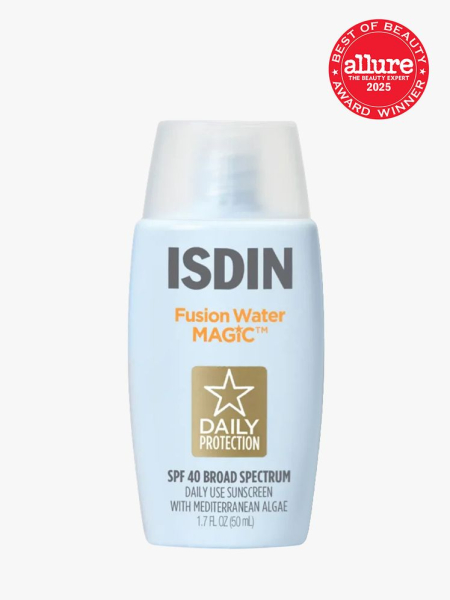
    Isdin Fusion Water Magic SPF 40 in branded blue bottle with clear cap on light gray background with red Allure Best of Beauty seal in the top right cornerSave to wishlistSave to wishlist

    Isdin

    Fusion Water Magic SPF 40

    $38

    Amazon

    $38

    Dermstore

    $38

    Sephora

    Allure editor in chief Jessica Cruel applying the Isdin Fusion Water Magic SPF 40

    Jessica Cruel

    Why it’s worth it: No, it’s not just water, but we are convinced there is a little bit of magic to Isdin’s Fusion Water Magic SPF 40. If your skin’s been looking a little lackluster, this is one of those sunscreens that does more than just protect—it subtly perks things up. The fully chemical formula has that lightweight, quick-absorbing texture the brand is known for, with zero heavy or chalky film. It delivers hydration and radiance with glycerin and sodium hyaluronate to keep skin plump and fresh, plus antioxidants like vitamin E and microalgae extract to fend off the environmental stressors that can leave skin looking tired. Silica softly blurs without flattening your glow, so the finish feels hydrated, subtly luminous, and just a little more awake than when you started.

    Tester feedback from editor in chief Jessica Cruel

    AccordionItemContainerButtonLargeChevron

    “Too greasy, too shiny, too oily, too chalky—these are all complaints that I hear from my family when I ask them if they are using sunscreen every day. That's when I recommend this Isdin Water Magic formula. It's a chemical sunscreen that goes on like a moisturizer. The finish is not matte, but it won't leave you looking greasy. It absorbs quickly and blends seamlessly into my brown skin with no purple tint. It's the perfect fit for those who hate the idea of sunscreen because of the way it feels. This lightweight option will leave them with no complaints.” —Jessica Cruel, editor in chief

    More to know

    AccordionItemContainerButtonLargeChevron

    • Sunscreen type: chemical
    • Key ingredients: 9% octocrylene, 7.3% homosalate, 4.5% octisalate, 2.7% avobenzone, sodium hyaluronate, glycerin, vitamin E, microalgae
    • Fragrance-free: no

    Best for Acne-Prone Skin: EltaMD UV Clear Blemish-Prone & Oil Balancing SPF 50
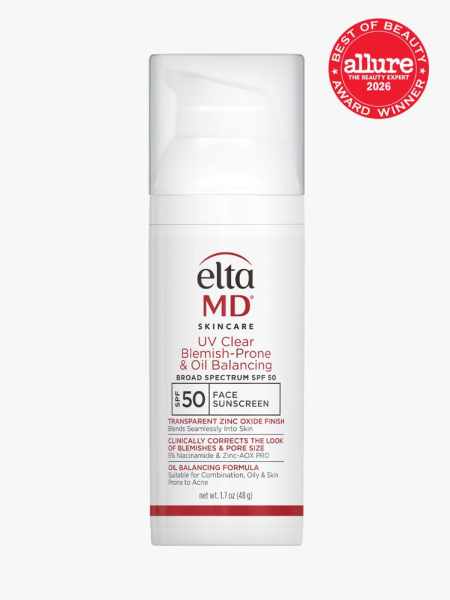
    EltaMD UV Clear Acne Blemish-Prone & Oil Balancing SPF 50 in branded component on a light gray background with the 2026 best of beauty seal in the top right cornerSave to wishlistSave to wishlist

    EltaMD

    UV Clear Blemish-Prone & Oil Balancing SPF 50

    $49

    Amazon

    $49

    Shop

    $49

    Dermstore

    Allure senior staff writer Elizabeth Gulino applying the EltaMD UV Clear Blemish-Prone & Oil Balancing SPF 50

    Elizabeth Gulino

    Why it’s worth it: If you already love the EltaMD UV Skin Recovery Broad-Spectrum SPF 50, but wish it were a little more dialed in for acne-prone or oily skin, the brand’s 2026 Best of Beauty Award-winning UV Clear Blemish-Prone & Oil Balancing SPF 50 is where things get interesting. It builds on the original UV Clear legacy—long considered a go-to for sensitive, breakout-prone skin—but takes it a step further. The formula pairs 11% zinc oxide with 5% niacinamide to help calm inflammation, even tone, and keep excess oil in check, while the brand’s proprietary ZincAOXPro Technology adds a layer of antioxidant defense against UV rays, blue light, pollution, and smog. You still get that lightweight, non-greasy texture the brand is known for, but with added benefits for congestion, shine, and post-breakout redness.
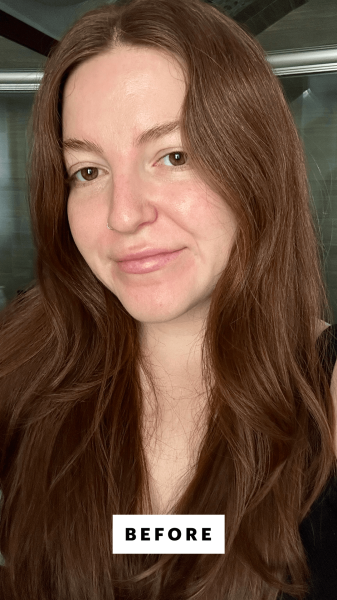
    A selfie of Allure senior staff writer Elizabeth Gulino before applying the EltaMD UV Clear BlemishProne  Oil Balancing...

    Gulino before applying the EltaMD UV Clear Blemish-Prone & Oil Balancing SPF 50

    Elizabeth GulinoA selfie of Allure senior staff writer Elizabeth Gulino after applying the EltaMD UV Clear BlemishProne  Oil Balancing...
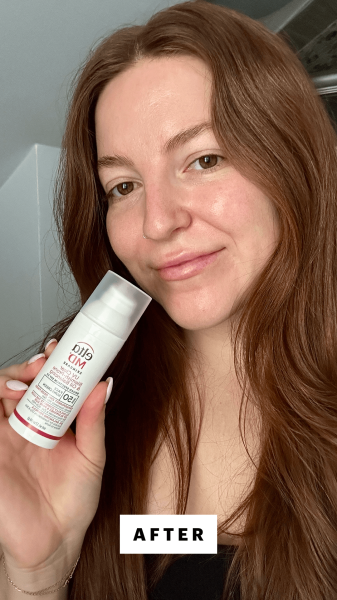
    Gulino after applying the EltaMD UV Clear Blemish-Prone & Oil Balancing SPF 50

    Elizabeth Gulino

    Tester feedback from senior staff writer Elizabeth Gulino

    AccordionItemContainerButtonLargeChevron

    "It’s no secret that EltaMD has the best of the best sunscreens. I’m a longtime user of the brand’s tinted version of UV Clear, but have recently started using the new UV Clear Blemish-Prone & Oil Balancing SPF 50 in my routine. EltaMD’s clinical trials are promising — the brand found that users of its new formula saw reduced visible blemishes, excess oil, and pore size, and experienced general skin improvement over time. While I don’t necessarily have acne-prone skin, who wouldn’t benefit from a skin-care sunscreen hybrid, anyway? Compared to the original, the texture of the Blemish-Prone & Oil Balancing SPF 50 is lighter, silkier, and all-around nicer! It's great for days when I'm not leaving my house and don't need any tinted coverage—though I hope EltaMD does launch tinted formulas in the future.” —Elizabeth Gulino, senior staff writer

    More to know

    AccordionItemContainerButtonLargeChevron

    • Sunscreen type: mineral
    • Key ingredients: 11% zinc oxide with 5% niacinamide
    • Fragrance-free: yes

    Frequently Asked Questions

    How does sunscreen work?

    As beauty journalists, at least one person on our staff chats with a dermatologist on a near-daily basis, and nearly every single one emphasizes the importance of wearing a proper broad-spectrum sunscreen with an SPF rating of, at the very least, 30. Wearing one daily (and reapplying every two hours) protects your skin from harmful UVA and UVB rays. As a refresher, too much exposure to the sun's rays can result in long-lasting damage, leading to concerns like sun spots, skin sagging, fine lines and wrinkles, and so on. (UVA rays, for good measure, penetrate more deeply than UVB rays and can potentially lead to more aggressive skin cancers, including melanomas.)

    As a reminder regarding efficacy, let's talk SPF, short for sun protection factor. SPF 30 guards against 97% of UVB rays, and SPF 50 is about 98%, and so forth. (SPF 15 only protects against 93%, which is why most dermatologists—and the Allure team—recommend at least 30.) The evidence is crystal-clear, so do yourself a favor, slather up, and consistently reapply facial sunscreen every few hours to minimize the effects of sun exposure—which, at its worst, can culminate in a skin cancer diagnosis.

    What's the difference between mineral and chemical sunscreens?

    Sure, there are thousands of SPF products to sift through, but finding the right sunscreen for your skin tone and type can be tricky. Like any other skin-care product, personal preferences run the gamut. Those with sensitive skin may prefer mineral or physical sunscreens, which are formulated with zinc oxide and/or titanium dioxide and "reflect ultraviolet rays off of them before the rays penetrate skin cells," as Loretta Ciraldo, MD, a Miami-based board-certified dermatologist, previously explained.

    On the other hand, those who prefer their SPF to feel more like a lightweight serum or moisturizer (that's also more likely to induce zero white or gray cast) will turn to chemical sunscreens, which "use chemicals that absorb damaging UV rays and convert them to non-damaging heat," says Sejal Shah, MD, a New York City-based board-certified dermatologist.

    Common chemical filters include avobenzone, homosalate, octocrylene, and octisalate, but there's a new one worth knowing about: bemotrizinol, or BEMT. Approved by the FDA in 2026, it's the first new sunscreen filter to get the green light in more than 25 years. It protects against both UVA and UVB rays, and it could make sunscreen more pleasant to wear, too. As Cincinnati-based cosmetic chemist Kelly Dobos previously told Allure, “We can make products with lighter texture and less greasiness in formulations.” Plus, BEMT is transparent on skin, so there's no white cast to worry about. You'll also find hybrid sunscreens that combine mineral and chemical filters, giving you even more options to choose from.

    Meet the experts

    • Loretta Ciraldo, MD, a board-certified dermatologist based in Miami
    • Kelly Dobos, a cosmetic chemist based in Cincinnati
    • May Hall, DO, a double board-certified dermatologist based in Asheville, North Carolina
    • Sejal Shah, MD, a board-certified dermatologist based in New York City
    • Jane Yoo, MD, a dual board-certified dermatologist and Mohs surgeon based in New York City

    How we test and review products

    When Allure tests a product, our editors look at it from every angle in an effort to best serve you. We review ingredients, scrutinize brand claims, and, when necessary, examine peer-reviewed scientific and medical studies. In addition to testing each and every product that's included in each and every review, we rely on experts who shape their fields, including dermatology, cosmetic chemistry, and medicine, to help us vet the ingredients and formulas.

    For our list of the best face sunscreens, we considered each product's performance across five primary categories: product ingredients and efficacy, packaging, fragrance, texture, and product wear. Every product was determined to have excelled in each category by our editorial team, which is composed of in-house writers and editors as well as contributors—along with special consideration from board-certified dermatologists. To learn more information on our reporting and testing processes, read our complete reviews process and methodology page.

    Our staff and testers

    A beauty product is a personal purchase. You might be searching for a face cream to address persistent dryness or a new nail product to add to your Sunday self-care routine; you may simply be browsing around for the latest launches to hit the hair market. No matter what you seek or your individual needs and concerns, Allure wants to ensure that you love anything we recommend in our stories. We believe that having a diverse team of writers and editors—in addition to the wide range of outside testers and industry experts we regularly call upon—is essential to reaching that goal.

    After all, can we really say a skin-care product is the “best” for people over 50 if the only testers we’ve solicited opinions from folks who have yet to hit 30? Can we honestly deem a high-end diffuser worthy of your hard-earned cash if it’s never been tested on curls? We’re proud that our staff spans a wide range of ages, skin tones, hair textures, genders, and backgrounds, which means that we are able to fairly assess any beauty product that comes into the beauty closet.
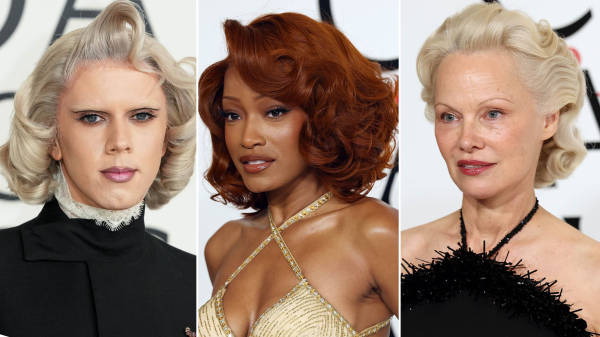

  • RFK Jr. Sidestepped the FDA on Peptides Access—Why We’re Worried

    RFK Jr. Sidestepped the FDA on Peptides Access—Why We’re Worried

    Robert F. Kennedy Jr. appears in profile with a syringe and vial across his face.Getty ImagesSave StorySave this storySave StorySave this story

    In an unprecedented move, Health and Human Services (HHS) secretary Robert F. Kennedy, Jr, announced his plans to allow broader use of six previously restricted peptides—going against the advice of the Food & Drug Administration (FDA).

    The six peptides in question—BPC-157, KPV, TB-500, MOTS-c, Epitalon, and Semax—came up for discussion in July, when an advisory panel, the Pharmacy Compounding Advisory Committee (PCAC), voted in favor of loosening restrictions and moving the peptides to the 503A Bulks List, which means that compounding pharmacies could legally prepare them. Their advice was just that, advice. It did not mean the peptides were immediately added to the 503A Bulks List or that they were automatically FDA-approved. But this latest development has moved the industry into “genuinely new territory,” says Dustin Robinson, a lawyer and founding partner of LumaLex Law, a firm that advises businesses in emerging health sectors, including peptides.

    The “interim enforcement discretion policy,” as it’s called, means compounding pharmacies can mix up the six peptides and the HHS won’t take enforcement action against them—as long as they follow a specific set of rules. Under these regulations, Robinson explains, pharmacies are protected only if they meet every condition, including: raw ingredients must come from FDA-registered manufacturers following good manufacturing practices; they must have a certificate of analysis (COA) that includes test results regarding identity, purity, endotoxins, and lack of contaminants like heavy metals; each product can contain only one peptide; each peptide is limited to specific forms, like intranasal use for Semax. The peptides cannot be purchased over the counter; they require a prescription from a licensed physician.

    The document shared by the Department of Health and Human Services also calls out Kennedy in particular, who has been a vocal advocate for peptide use (although he is not a doctor or a medical professional). “The secretary of HHS has determined that this limited enforcement-discretion policy will discourage the continued, widespread use of certain research-use-only peptides supplied by foreign manufacturers that pose a safety risk to US patients,” it reads, adding that based on “available evidence” and the recommendations of a Pharmacy Compounding Advisory Committee, “the secretary has determined that the policy advances patient choice and freedom while appropriately protecting patient safety.”

    Does the FDA agree with RFK Jr.’s decision?

    It’s worth reiterating that this policy comes without the blessing of the FDA. None of these peptides have undergone the notoriously rigorous and often time-consuming and expensive process to earn FDA approval, which means they don’t have the added safeguards and peace of mind that come with an FDA-approved substance. And, when you’re injecting something into your body, you want it to be safe, right?

    The Associated Press reports that FDA staff helped create the HHS’s safety guardrails, though the publication adds that the“Food and Drug Administration's scientific staffers had little input on the decision and opposed the changes, according to six people familiar with its development.” In related news, Australian actor Richard Norton’s 2025 death was just linked to excess use of a peptide he got via a doctor’s prescription. (The peptide was not one of the six mentioned above.)

    The policy puts in place a “highly specific safety valve”

    While it’s “tempting” to see this as a way to bypass the FDA, says David J. Holt, attorney and owner of Holt Law, a health-care business law firm in Minnesota and California, it’s “actually a highly specific safety valve” meant to “immediately rescue patients from a dangerous black market”—or that “for research only” loophole that allowed people to buy peptides from various sources without medical oversight. (By checking a box that says the peptides are “for research purposes only,” people can bypass the traditional pathways.)

    These updates may actually put some much-needed rules and regulations in place, says Jay Campbell, cofounder of the American Peptide Association. The policy covers state-licensed pharmacies, federal facilities, and physicians compounding for a patient with a prescription, he explains. Pharmacies are also required to report any serious adverse events to the FDA and label the products as a compounded drug product that’s not for resale.

    “Those are exactly the safeguards consumers have needed for years,” says Holt, adding that regulation aside, “this is a smart move to bring some manufacturing and related commerce in the peptide space back into the United States, as massive importing is currently occurring.”

    What standard does RFK Jr.’s policy set for the peptide space going forward?

    According to Campbell, this decision sets two specific standards for the future. The first, he says, is political: “HHS has shown it will act on peptides even when the FDA’s career staff disagree, and that precedent will shape what happens to the next group [of peptides to be reviewed].”

    The second standard is quality, as the interim policy “spells out exactly what testing a peptide should pass before it reaches a human being.” As Campbell explains, the raw ingredient must come from an FDA-registered manufacturer and requires the aforementioned COA “covering identity, purity, and endotoxins.” And because pharmacies will be required to report any adverse effects, that means more “real-world evidence” could be collected, says Campbell. “This should become the floor for every peptide sold in this country, not just the six in this policy,” he adds.

    Don’t expect these changes to take place overnight, however, since pharmacies need to establish a compliant supply first, says Robinson. And don’t expect this to become par for the course for other experimental medications, adds Holt. “This happened because of a perfect storm: massive consumer demand, an existing PCAC advisory vote in favor of these peptides, a federal administration that appears pro-patient choice related to peptides, and finally a bureaucratic FDA rulemaking process that takes years to finalize,” he explains, calling it a “rare, targeted intervention” that helps protect patient safety and advances patient choice. But again, “I'll reiterate this is not a green light for medical and wellness clinics to start compounding every peptide that pops up in their social media feed.”

    Robinson expects we’ll see a similar approval process for the next batch of peptides, as the same panel from July is expected to weigh in on those in February. But regardless of what happens in the future, this policy isn’t permanent, he says. A future administration could “reverse it overnight.”

    Where does this decision leave the FDA and its approval process?

    “Access should never be confused with scientific or clinical validation,” says Ava Shamban, MD, a board-certified dermatologist in California who has served as an investigator in FDA trials. From a scientific and clinical perspective, she says, it’s critical to distinguish between expanding access and establishing safety.

    “This policy creates a potential pathway for greater access, but it does not necessarily establish a new standard for FDA drug approval,” Dr. Shamban says. “That still requires rigorous evaluation of safety, efficacy, dosing, and manufacturing quality and further testing.”

    To get a drug approved, explains Steve Kates, PhD, vice president of regulatory affairs at Dicerna Pharmaceuticals, not only do you have to show it’s efficacious, but you have to “justify a safety population.” For example, he says, Ozempic was tested on thousands of people before becoming widely available, creating a “massive amount” of safety data. The same safety data does not exist for these six peptides.

    Efficacy, he adds, is determined by “clinically meaningful endpoints” the FDA can negotiate with, and that typically requires “two well-controlled clinical trials.” Though people may argue that the peptides have been used in trials, Dr. Kates says they are not “statistically significant.”

    Dr. Shamban says that some peptides have been on the market for decades, “showing benefits and demonstrating efficacy in tens of thousands of patients anecdotally under a doctor's care, even if they aren't FDA-approved.” But that doesn’t mean they should be able to skip out on the evaluation process, nor does it mean they’re suddenly legal and approved.

    Other peptides are “not even remotely close to the timing, usage, or testing levels that would allow them to be considered safe without the full rigor of FDA approval,” she adds. “The red flag is the precedent this could create if access substitutes for evidence. Innovation is essential in medicine, but regulatory flexibility should never diminish the scientific standards that protect patients.” Dr. Shamban notes that there’s still not a ton of “adequate human clinical data” to establish dosages, long-term safety, potential drug interactions, and whether the peptides consistently deliver the benefits they promise.

    “Purity, sterility, consistency, and immune reactions are legitimate concerns, particularly with injectable compounds,” she explains. “And when we're discussing peptides marketed for collagen production, tissue repair, inflammation, or longevity, consumers need to understand that biological plausibility is not proof of clinical benefit.”

    Expect peptides to get more expensive

    Robinson notes that these rules “cut out most of the overseas supply chain,” which means manufacturing capacity may be “tight” at first (peptide users, including people purchasing GLP-1 weight loss drugs, often turned to online resources and overseas suppliers to acquire their peptides). He also thinks this policy makes the argument for a gray market weaker. “For consumers, access runs through a prescription, which means telehealth will be the front door for most people.”

    However, this new policy likely won’t stop the gray market business. Campbell expects prices to “climb substantially” due to the fact that demand will spike and pharmacies must now source their peptides from FDA-registered manufacturers and run the necessary quality testing, too. Since the rules only apply to the pharmacy lane, he says, things will get more expensive, which means that people currently buying from the gray market will probably continue to do so. In addition, “stacks" of combined peptides, which are popular among the peptide-injecting set, aren't covered under the declaration.

    The decision marks a significant development, but not a change in legal status

    Patients are increasingly curious about peptides, says Amanda Kahn, MD, a board-certified internist in New York City, but she adds that they’ve been “difficult to access” through legitimate medical channels. Dr. Kahn views the new policy as a “significant development” for longevity, regenerative medicine, and preventative health. “There has been a growing disconnect between patient demand for peptide therapies and the regulatory framework governing access to them,” she explains, calling the updates an “important step” in bringing peptide therapies into a more medically supervised environment.

    “Peptide therapeutics represent an interesting frontier in medicine, but we need innovation and scientific rigor to move forward together.” Dr. Kahn thinks more rigorous human studies are required, and says she’d never encourage anyone to “experiment with injectable peptides on their own.”

    As for Koehl Robinson, CEO of telehealth company CeliaRx, she's feeling “encouraged and clear-eyed” about the news. “The developments…show that regulators are willing to look at peptides compound by compound…instead of treating the whole category as one risk,” she explains. “For me, it validates why I started CeliaRx. Peptides changed my health, and I saw how hard they were to access safely. The missing piece was a system with physicians, pharmacies, and accountability. That’s what we’ve built, and moments like this are when that infrastructure matters most.” CeliaRx's 503A pharmacy is set to open in 2027. For now, Koehl says, “Our manufacturing team is preparing so we can move quickly once the rules are final, but we won’t move faster than the quality allows.”

    Dustin Robinson echoes Koehl's thoughts, saying that the HHS didn't create the demand—peptide users did. The new policy "moves that demand into a channel with a pharmacist, a prescription, and a paper trail.” However, this doesn't mean FDA approval and doesn't change the legal status of the peptides, he explains. “The FDA’s own drug reviewers recommended against listing them. HHS made a policy call, not a scientific finding that they’re safe or that they work.”

    What to know if you want a prescription for one of the six peptides

    If these peptides start popping up via providers near you, remember that they're not FDA-approved and have not been added to the 503A Bulks List, no matter what marketing says. “You’re likely going to see clinics calling these peptides ‘FDA-approved’ or something similar,” says Campbell. “They are not.”

    Robinson recommends a few safety precautions if you are getting one of the six peptides from a pharmacy. First, look at the label and ensure it reads “This is a compounded drug product. Not for resale.” If not, it isn’t covered under the HHS’s policy. Don’t be afraid to ask the pharmacy where the ingredient was manufactured. “A legitimate pharmacy should be able to answer,” he says. Report any side effects. Robinson says that the label should explain how you can report what you’re experiencing so the FDA can compile data.

    Dr. Kahn, who says she's a “big believer” in the potential of peptides, tells her patients to remember that not all peptides are created equal: Some are well-researched, while others are experimental. “I always encourage patients to start with a specific health goal rather than just taking peptides because they're trending,” she says. “If you're interested in peptide therapy, work with a physician who understands these compounds, can assess the risks, benefits, and, importantly, the unknowns, and can source them through a reputable, licensed pharmacy.” More isn't always better, Dr. Kahn says. “It's about choosing the right therapies for the right patient, with appropriate medical oversight.”

    Dr. Shamban says she is “cautiously optimistic” about peptide science, but has concerns too. “As a dermatologist involved in clinical research, I recognize the importance of developing new therapeutic options. Peptides are not inherently problematic. In fact, peptide-based medications already have established roles in medicine,” she explains. “My greatest concern is that patients may interpret greater availability as confirmation of safety or effectiveness, particularly when these substances are marketed with compelling claims about regeneration, anti-aging and longevity—all key buzzwords being tossed around as a trend rather than true science.”

    The goal, Dr. Shamban says, should be to accelerate science, use available clinical resources, and collect and report real-time data. “Greed or gain can never come before patient safety or care,” she says. These guardrails are in place for a reason. We need to support responsible innovation and physician-guided treatment. And we need to protect patients from becoming part of an uncontrolled experiment.”

  • 11 Best Lip Glosses 2026 for a  Plumping, Hydrating, and Shiny Pout

    11 Best Lip Glosses 2026 for a Plumping, Hydrating, and Shiny Pout

    Editor holding Danessa Myricks Beauty Glosswork 4D Ultra Shine Plumping Gloss MAC Lipglass Air Kiko Milano 3D Hydra...Collage: Jemeria Davison; Source images: Courtesy of brands and editorsSave StorySave this storySave StorySave this story

    There was once a time when finding the best lip gloss was as simple as picking up the first shiny tube that you saw at the beauty supply store. Now, classic glosses are competing with the likes of more innovative glossy balms, lip tints, stains, and skin-care-infused lipsticks that, to the untrained eye, all seem to offer a hydrated and voluminous pout—but they’re not all made equal. Today’s top glosses are more elegant in texture, infused with nourishing ingredients, and don’t leave your lips feeling sticky and gooey like those of your childhood—but still give you the same beloved reflective shine and volume. You’ll also find plumping glosses that don’t sting or ones that smooth fine lines for softer lips over time.

    Our Top Lip Glosses

    • Best Overall: MAC Lipglass Air, $25
    • Best Shimmer: Chanel Rouge Coco Hydra Gloss, $45
    • Best Shade Range: Kiko Milano 3D Hydra Lipgloss, $14
    • Best High Pigment: Refy Lip Gloss, $20
    • Best for a Painless Plump: Danessa Myricks Beauty Glosswork 4D Ultra Shine Plumping Gloss, $26
    • Best for Dry Lips: Makeup By Mario SuperShine Lip Gloss, $26

    Frequently Asked QuestionsAccordionItemContainerButtonLargeChevron

    • What’s the difference between a lip gloss and a glossy balm?
    • What are some ingredients to look out for in a good lip gloss?
    • How we test and review products
    • Our staff and testers

    Below, we put together our favorite editor-tested and -approved glosses to make sure a shiny lip is always within reach.

    Best Overall: MAC Lipglass Air

    MAC Lipglass Air in Casual on a grey backgroundSave to wishlistSave to wishlist

    MAC

    Lipglass Air

    $25

    Nordstrom

    $25

    Ulta Beauty

    $25

    Sephora

    Why it’s worth it: MAC’s Lipglass Air feels weightless and invisible—in the best possible way—while packing moisturizing ingredients (coconut, meadowfoam, and jojoba oils) to keep your lips feeling pillowy soft and hydrated. And, without staining your lips or using drying ingredients like a liquid lipstick usually does, it manages to stay put (and ultra-shiny) for hours. It comes in 10 opaque colors that you can sheer out for a more subtle tint or layer on for a brighter look. And did we mention it’s actually not sticky?

    Former Allure content director Kara McGrath applying the MAC Lipglass Air in Casual

    Kara McGrathMcGrath after applying the MAC Lipglass Air in Casual

    McGrath after applying the MAC Lipglass Air in Casual

    Kara McGrath

    Tester feedback from former content director Kara McGrath

    AccordionItemContainerButtonLargeChevron

    “This lives up to the ‘non-sticky’ claims better than any other lip gloss I've tried in recent memory. It's so lightweight that it feels closer to an oil, but the color actually sticks around for more than an hour. All of that plus the fact that Casual, a ‘deep dirty peach,’ is pretty close to my natural lip shade means this has officially become the lip product I reach for most often out of the hundreds in my stash." —Kara McGrath, former content director

    More to know

    AccordionItemContainerButtonLargeChevron

    • Key ingredients: coconut oil, meadowfoam seed oil, jojoba seed oil
    • Shades: 10

    Best Shimmer: Chanel Rouge Coco Hydra Gloss

    Chanel Rouge Coco Hydra Gloss in branded component on a light gray backgroundSave to wishlistSave to wishlist

    Chanel

    Rouge Coco Hydra Gloss

    $45

    Chanel

    $45

    Ulta Beauty

    Why it’s worth it: We can’t help but fall in love with beautiful packaging, but it’s even better when what’s inside is just as good—which is the case with Chanel’s Rouge Coco Hydra Gloss. It gets its texture-smoothing, nourishing finish from camellia ceramides, derived from the camellia flower and known to help repair the skin barrier and soothe dryness. With a wide range of colors—15 to be exact, including five iridescent shimmers that we’re obsessed with—you’d be happy swiping on this gloss during the day or on a night out. If you say you love your lips, put them in Chanel.

    Allure commerce writer Tasha Nicole Smith applying the Chanel Rouge Coco Hydra Gloss

    Tasha Nicole SmithSmith after applying the Chanel Rouge Coco Hydra Gloss

    Smith after applying the Chanel Rouge Coco Hydra Gloss

    Tasha Nicole Smith

    Tester feedback from commerce writer Tasha Nicole Smith

    AccordionItemContainerButtonLargeChevron

    “I am a package snob, there I said it. I love the feeling of pulling out my chic-looking lip gloss tube to reapply a heaping glob to my lips, sue me. But the sparkly finish of this gloss in the shade 462 Givre really rounds out the experience. As a clear lip gloss warrior, I don't often reach for shimmer glosses unless the occasion calls for something more glam, and this is definitely a special occasion gloss. The creamy white glittery color gave it a frosted look, which makes it perfect for icy holiday makeup looks. Plus, the soothing formula also makes it a good choice for the colder winter months when my lips are a bit drier, though I did have to reapply a few times throughout the day. It glided on the lips smoothly and didn't have a gritty texture like some glittery glosses often do. Looking forward to the next event to pull this one back out.” —Tasha Nicole Smith, commerce writer

    More to know

    AccordionItemContainerButtonLargeChevron

    • Key Ingredients: camellia ceramides, hydra-peptide complex
    • Available shades: 15

    Best Shade Range: Kiko Milano 3D Hydra Lipgloss

    Kiko Milano 3D Hydra Lipgloss with silver cap and an Allure Best of Beauty stamp in the top right corner on a light gray backgroundSave to wishlistSave to wishlist

    Kiko Milano

    3D Hydra Lipgloss

    $14

    Amazon

    $14

    Shop

    Allure editorial assistant Jennet Jusu applying the Kiko Milano 3D Hydra Lipgloss.

    Jennet Jusu

    Why We Love It: The most obvious reason we love this gloss is that it only costs $10, so we don’t feel guilty about stocking up on more than one of its impressive 30 shades. Whether you keep it simple with a clear glossy top coat or want a vibrant pink sheen, there’s something for everyone. The 2026 Best of Beauty-winning formula uses the brand’s 3D Lip Complex, which blends bidens pilosa extract—known for its anti-inflammatory properties and smoothing effect—with cotton seed and linseed oil to help even texture and soften the skin.

    Tester feedback from associate social media manager Katie Gunderman

    AccordionItemContainerButtonLargeChevron

    "I'm personally in a Y2K revival era (despite being born in 2001). I can't get enough cute hair clips, bright colors, and glitter everything. The Kiko Milano 3D Hydra Lipgloss packs the high-shine glitter punch I've been obsessed with. The shade 04 Pearly Peach Rose is a stunning light, frosty pink that looks amazing under all of my liners. It's nonsticky, slightly sheer, and comes in 30 shades, so there is no excuse to not find your perfect match." —Katie Gunderman, associate social media manager

    More to Know

    AccordionItemContainerButtonLargeChevron

    • Key ingredients: 3D Lip Complex
    • Available shades: 30 shades

    Best High Pigment: Refy Lip Gloss

    Refy Lip Gloss branded tube component in gray with black accents on a light gray background with red Allure Best of Beauty seal in the top right cornerSave to wishlistSave to wishlist

    Refy

    Lip Gloss

    $20

    Shop

    $20

    Sephora

    Why it’s worth it: Don't let Refy’s minimal packaging fool you: This gloss offers maximum impact, particularly when it comes to hydration and pigment. Two of the gloss’s key ingredients, hyaluronic acid and jojoba seed oil, are humectants known for drawing moisture into the skin. Along with shea butter, which helps to lock in moisture and soften the lips, this formula creates a non-sticky glaze with striking shine. This gloss comes in 14 shades, from subtle nudes to vibrant reds, so there are plenty of options for both everyday wear and full-glam looks.

    Allure social director Kassidy Silva applying the Refy Lip Gloss

    Kassidy SilvaSilva after applying the Refy Lip Gloss

    Silva after applying the Refy Lip Gloss

    Kassidy Silva

    Tester feedback from social director Kassidy Silva

    AccordionItemContainerButtonLargeChevron

    “Refy's clear gloss adds the perfect shiny sheen to top off any lip combo. It's the first gloss I've found that has my ideal balanced combo of staying power and weightlessness, all while working like a balm to nourish my lips. Plus, for $20, it's a steal.” —Kassidy Silva, social director

    More to know

    AccordionItemContainerButtonLargeChevron

    • Key ingredients: hyaluronic acid, jojoba seed oil, shea butter
    • Available shades: 14

    Best Balmy Formula: M.ph Top Coat Lip Gloss

    M.ph Top Coat Lip Gloss in branded component on a light gray backgroundSave to wishlistSave to wishlist

    m.ph by Mary Phillips

    Top Coat Lip Gloss

    $26

    Shop

    $26

    Sephora

    Why it’s worth it: Mary Phillips’s signature sculpted makeup look, which has been spotted on celebrities like Hailey Bieber, Kendall Jenner, and Kim Kardashian, is beloved for its neutral color palette and underpainting technique (using the m.ph Underpainting Palette) that creates an enhanced but natural finish. So, it’s only right that her Top Coat Lip Glosses fall under the “your-skin-but-better” umbrella. This gloss is powered by a blend of botanical oils like jojoba and sweet cherry oil that protect the skin barrier on the lips and comes in eight shades, including nude and pink hues along with deep, vampy browns and purples. Each shade applies like a creamy balm with a semi-sheer tint for a natural finish, but is easily buildable for stronger pigment and more intense shine.

    Allure commerce market editor Sarah Hoffmann applying the M.ph Top Coat Lip Gloss in Mouthy

    Sarah HoffmannAllure commerce market editor Sarah Hoffmann after applying the M.ph Top Coat Lip Gloss in Mouthy

    Hoffmann after applying the M.ph Top Coat Lip Gloss in Mouthy

    Sarah Hoffmann

    Tester feedback from commerce market editor Sarah Hoffmann

    AccordionItemContainerButtonLargeChevron

    “If you have a tricky lip line, this is the gloss for you. I have a double lip line and the applicator and opacity are ideal for adding color and fullness to the parts of my lips where the pigment is all but nonexistent. I like to apply a coat to the center of my lips, then use the flat, pleasantly maneuverable applicator to almost line and blend the gloss so I get a wash of color all over without a harsh stop between my mouth and chin. The level of detail that went into this product, down to the elegant packaging, feels like the M.ph signature at this point.” —Sarah Hoffmann, commerce market editor

    More to know

    AccordionItemContainerButtonLargeChevron

    • Key Ingredients: jojoba seed oil, sweet cherry oil, rose canina fruit oil
    • Available shades: 8

    Best for a Painless Plump: Danessa Myricks Beauty Glosswork 4D Ultra Shine Plumping Gloss

    Danessa Myricks Beauty Glosswork 4D Ultra Shine Plumping Gloss in branded tube component on a light gray backgroundSave to wishlistSave to wishlist

    Danessa Myricks Beauty

    Glosswork 4D Ultra Shine Plumping Gloss

    $26

    Shop

    $26

    Sephora

    Why it’s worth it: When you think of a lip-plumping gloss, the first thing that comes to mind is likely the sting. Well, this is not that. Danessa Myricks’ Glosswork Plumping Gloss uses the brand’s patented CushionWrap Technology, a polymer blend combined with peptides and algae extract, to painlessly plump and smooth the look of fine lines. It also has a metal applicator that lends a refreshing, cooling effect. The gloss is available in 14 shades, including Abundantly Clear (classic clear) and Spiced Latte (nude), with a few unexpected hues like Grape Soda (bright purple) and Pink Sorbet (citrusy orangey-pink).

    Smith applying the Danessa Myricks Beauty Glosswork 4D Ultra Shine Plumping Gloss

    Tasha Nicole SmithSmith after applying the Danessa Myricks Beauty Glosswork 4D Ultra Shine Plumping Gloss

    Smith after applying the Danessa Myricks Beauty Glosswork 4D Ultra Shine Plumping Gloss

    Tasha Nicole Smith

    Tester feedback from commerce writer Tasha Nicole Smith

    AccordionItemContainerButtonLargeChevron

    “I tend to steer clear of super spicy plumping gloss formulas. I reapply my gloss countless times a day (it’s habitual, not always because I actually need to reapply) and can't bear the sting, so this is an option I gravitate toward. The plumping effect was actually painless but was still noticeable and gave me a natural juicy pout as opposed to a more dramatic swell. I wore this gloss for a night out that included a few glasses of wine and a number of shared appetizers and was surprised by the staying power. Though the freshly applied shine faded by the time I finished eating, when I went to reapply, my lips were still hydrated and had a sheen that mimicked that of a lip balm. I also didn’t notice any extreme stickiness upon application, though as it wore off there was a slight tackiness—which I didn't mind as I quite like a thick, sticky gloss but if you prefer a thinner texture, it’s worth noting. I’m also very intrigued by the different colors that this gloss comes in. I was initially most drawn to the nude brown shades but the bright purple Grape Soda shade is next up on my list to try.” —Tasha Nicole Smith, commerce writer

    More to Know

    AccordionItemContainerButtonLargeChevron

    • Key Ingredients: Cushion Wrap Technology (a polymer blend combined with peptides and algae extract)
    • Available shades: 12 shades

    Best K-Beauty: Hera Sensual Nude Gloss

    Hera Sensual Nude Lip Gloss in branded component on a light gray backgroundSave to wishlistSave to wishlist

    Hera

    Sensual Nude Gloss

    $35

    Amazon

    Allure contributing commerce writer Christa Joanna Lee applying Hera Sensual Nude Lip Gloss

    Christa Joanna Lee

    Why it’s worth it: Hera’s Sensual Nude Gloss is a sheerer option for anyone who prefers a more subtle color payoff without compromising on shine. The gloss is enhanced with ingredients like phytosterol, a plant-derived compound that supports collagen production and has antioxidant properties, and evening primrose oil to soothe the skin and moisturize the lips. The gloss also has menthol, which provides a minty cooling sensation and a slight plumping effect—but nothing too intense or unbearable. It’s available in 11 shades that are equally pretty on their own or on top of a lipstick.

    Tester feedback from contributing commerce writer Christa Joanna Lee

    AccordionItemContainerButtonLargeChevron

    “I’m not really a lip girl, but when I do wear one, I always go for a gloss. The lightweight formula is so comfortable I almost forget I’m wearing it, and the menthol gives this refreshing, cooling sensation that feels invigorating. Plus, all the shades are super wearable, making it easy to swipe and go.” —Christa Joanna Lee, contributing commerce writer

    More to Know

    AccordionItemContainerButtonLargeChevron

    • Key Ingredients: Phytosterol, evening primrose oil
    • Available shades: 11 shades

    Best Long-Wearing: Make Up For Ever Super Boost Moisturizing & Plumping Lip Gloss

    Make Up For Ever Super Boost Moisturizing & Plumping Lip Gloss in branded component on a light gray backgroundSave to wishlistSave to wishlist

    Make Up For Ever

    Super Boost Moisturizing & Plumping Lip Gloss

    $26

    Nordstrom

    $26

    Sephora

    Why it's worth it: Need your gloss to stay put for the long haul? Don’t sleep on Make Up For Ever’s Super Boost Moisturizing & Plumping Lip Gloss. It’s super hydrating on the lips, thanks to hyaluronic acid and a blend of oils from camellia, cotton, and meadowfoam flowers, and imparts color that lasts for hours (although you may have to touch it up after eating). It’s a little on the thicker side, but that helps amp up the shine and lock in the all-day moisturizing effect.

    Allure senior beauty editor Jesa Marie Calaor applying the Make Up For Ever Super Boost Moisturizing & Plumping Lip Gloss

    Jesa Marie CalaorCalaor after applying the Make Up For Ever Super Boost Moisturizing  Plumping Lip Gloss

    Calaor after applying the Make Up For Ever Super Boost Moisturizing & Plumping Lip Gloss

    Jesa Marie Calaor

    Tester feedback from senior beauty editor Jesa Marie Calaor

    AccordionItemContainerButtonLargeChevron

    “This high-shine gloss has a curvy doe foot that fits the contours of my lips, making it feel so satisfying to put on. Its formula is a little gooey, but not at all sticky, and deposits just the right amount of color. (My go-to shade is Fiery Love, which tints my lips with a warm cherry.) I love how it makes my lips look ever-so-slightly plumper.” —Jesa Marie Calaor, senior beauty editor

    More to know

    AccordionItemContainerButtonLargeChevron

    • Key ingredients: hyaluronic acid, camellia japonica seed oil, cotton seed oil, meadowfoam seed oil
    • Shades: 11

    Best for Dry Lips: Makeup By Mario SuperShine Lip Gloss

    Makeup by Mario Supershine Lip Gloss in branded component on a light gray backgroundSave to wishlistSave to wishlist

    Makeup by Mario

    Supershine Lip Gloss

    $26

    Shop

    $26

    Sephora

    Why it’s worth it: If you typically gravitate toward oils or balms over glosses, the Makeup By Mario SuperShine Lip Gloss feels like a hybrid of all three. Unlike a lot of other glosses, this one actually hydrated Allure content director Sophia Panych’s lips, which is why we named it a One to Watch debut last year. Its key ingredients are pomegranate extract, jojoba oil, and hyaluronic acid—all of which give it the silky, hydrating formula that sets it apart. “I'd say the best word to describe this formula is '"cushy’"—it's super comfortable to wear throughout the day,” says former features director Dianna Singh. “And the applicator—a wide, flatter-than-normal doe-foot—picks up just the right amount of product.”

    Allure social media manager applying the Makeup by Mario Supershine Lip Gloss

    Bianca RichardRichard after applying Makeup by Mario Supershine Lip Gloss

    Richard after applying Makeup by Mario Supershine Lip Gloss

    Bianca Richard

    Tester feedback from social media manager Bianca Richards

    AccordionItemContainerButtonLargeChevron

    “Call me a Makeup By Mario stan, because I love almost everything from their collection, but their SuperShine Lip Gloss has become one of my favorite go-tos for that ultra-glossy finish without feeling tacky on the lips. I love the shade range, with rosewater becoming my #1 pick for a simple lip combo.” —Bianca Richards, social media manager

    More to know

    AccordionItemContainerButtonLargeChevron

    • Key ingredients: pomegranate extract, jojoba oil, hyaluronic acid
    • Shades: 11

    Frequently Asked Questions

    What’s the difference between a lip gloss and a glossy balm?

    “To be honest, I think a glossy balm to one brand could be a lip gloss to another; it really depends on the marketing. I think glosses usually target high shine and usually impart color onto the lips, while glossy balms focus more on nourishing the lips while adding shine, but a lot of ingredients in these two products are the same.”

    What are some ingredients to look out for in a good lip gloss?

    “Hydrogenated polyisobutene is not a very sexy sounding ingredient, but it is a polymer that offers nice glide and cushion to the product. Most lip glosses have hydrogenated polyisobutene because it creates great body to the product without being tacky, and this usually makes up the bulk of the formula. I think another ingredient that people should look for is whether the lip gloss is preserved (also not sexy). Even though the formulas usually do not contain water, our saliva can potentially contaminate lip products if they are unpreserved. Ingredients like Phenoxyethanol and Ethylhexylglycerin are some examples of preservatives that can be used in lip applications.”

    How we test and review products

    Before reviewing any makeup, we ask questions about a number of factors: What ingredients are in it? Does the brand offer a wide shade range inclusive of consumers with all skin tones and undertones? Is it safe for readers who have sensitive skin or wear contact lenses? Is it on the affordable side or more of a splurge? Is its packaging consciously designed or needlessly wasteful?

    For our review of the best lip glosses, we enlisted the help of multiple editors, writers, and contributors. We considered each product’s performance across four primary categories: ingredients, wear and longevity, packaging, and inclusivity. For more on what's involved in our reporting, check out our complete reviews process and methodology page.

    Our staff and testers

    A beauty product is a personal purchase. You might be searching for a face cream to address persistent dryness or a new nail product to add to your Sunday self-care routine; you may simply be browsing around for the latest launches to hit the hair market. No matter what you seek or your individual needs and concerns, Allure wants to ensure that you love anything we recommend in our stories. We believe that having a diverse team of writers and editors—in addition to the wide range of outside testers and industry experts we regularly call upon—is essential to reaching that goal.

    After all, can we really say a skin-care product is the "best" for people over 50 if the only testers we've solicited opinions from folks who have yet to hit 30? Can we honestly deem a high-end diffuser worthy of your hard-earned cash if it’s never been tested on curls? We're proud that our staff spans a wide range of ages, skin tones, hair textures, genders, and backgrounds, which means that we are able to fairly assess any beauty product that comes into the beauty closet.

    Discover more Allure editor favorites:

    • Gucci's Gloss à Lèvres Made Me a Lip Gloss Convert
    • Summer Fridays' New Dream Lip Oil Is Quiet Luxury for Your Lips
    • This Fenty Beauty Gloss Gives You Fuller-Looking Lips Without Any Spiciness
  • 8 Best Brightening Body Washes 2026 for a Head-to-Toe Glow

    8 Best Brightening Body Washes 2026 for a Head-to-Toe Glow

    A collage of Kitsch CeraVe and Dove brightening body washes on a light pink backgroundCollage: Jemeria Davison; Source images: Courtesy of brandsSave StorySave this storySave StorySave this story

    The winter blues are real (shorter days, colder temps), so we like to maximize our time spent indoors by indulging in more self-care. The best brightening body washes, for example, help us bring back our glow, even on the dreariest January day. Anyone who feels their skin looks lackluster, dry, and dull will benefit from using a brightening body wash, but exfoliating, resurfacing formulas are particularly useful for people with rough, bumpy skin; dry elbows, knees, and hands; razor bumps or acne marks, says Alicia Zalka, MD, a board-certified dermatologist based in western Connecticut.

    Our Top Brightening Body Washes

    • Best Gel Overall: Iota Brightening Body Wash, $23
    • Best Oil Overall: Dove Beauty Serum + Radiance Oil Body Wash, $13
    • Best Bar Overall: Kitsch Kojic Acid Brightening Body Wash Bar, $12
    • Best for Body Acne: CeraVe SA Body Wash for Rough and Bumpy Skin, $14

    Frequently Asked Questions

    • Does brightening body wash work?
    • What are the best body wash ingredients to address hyperpigmentation?
    • Meet the experts
    • How we test and review products
    • Our staff and testers

    Now, we know what you’re thinking: Don’t these brightening formulas just go straight down the shower drain? Technically, yes, they do, but that doesn’t mean they don’t leave a lasting nourishing and exfoliating impact. It’s all about using gentle, thoughtfully formulated cleansers made with the right ingredients instead of harsh soaps or alkaline body wash; Dr. Zalka compares it to doing the laundry. “You use gentle detergent for some fabrics and bleach for others,” she says. “These get washed down the drain, but while they are in contact with the clothing fabric, they have their effect.”

    Sound like you? It might be time to swap your shower gel for the best brightening body washes, which we’ve rounded up below.

    Best Gel Overall: Iota Brightening Body Wash

    Iota Brightening Body Wash in branded component on a light gray backgroundSave to wishlistSave to wishlist

    Iota

    Brightening Body Wash

    $23

    Nordstrom

    $23

    Shop

    $23

    Ulta Beauty

    Why it's worth it: With a sleek, minimalist bottle that wouldn’t look out of place at a fancy boutique hotel and a sparklingly cheerful, but still elevated mandarin orange fragrance, Iota’s Brightening Body Wash turns a daily chore into an entire experience. The combination of citrus fragrance and airy, fluffy bubbles lifts your spirits, and the blend of brightening ingredients, including powerhouse vitamin C, smooths and evens skin. The winter blahs don’t stand a chance.

    Tester feedback from senior news editor James Manso

    AccordionItemContainerButtonLargeChevron

    “I've always been skeptical of active ingredients in cleansers and body washes because, after all, how well does an ingredient work when you wash it off right away? But in the case of Iota's Brightening Body Wash, I frankly don't care. The experience of this product is so lovely, from its rich gel texture to the perfect lather. Sure, the callouts are impressive: it has niacinamide, vitamin C from pineapple and yuzu, and pre- and postbiotics; but the bergamot the brand sources from Calabria, Italy is what does it for me; I find the fresh, citrusy zing of the scent utterly irresistible.” —James Manso, senior news editor

    More to know

    AccordionItemContainerButtonLargeChevron

    Key ingredients: vitamin C, niacinamide
    Fragrance-free: no
    Scents available: Mandarin Rind + Cedar Atlas, Oiishi Berry (limited-edition)

    Best Oil Overall: Dove Beauty Serum + Radiance Oil Body Wash

    Dove Serum+ Radiance Oil Body Wash in branded bottle component on a light gray background with the 2026 best of beauty seal in the top right cornerSave to wishlistSave to wishlist

    Dove

    Beauty Serum + Radiance Oil Body Wash

    $13

    Amazon

    Why it's worth it: Allure contributor Kara McGrath isn’t the only one who loves this nourishing, silky oil wash; multiple editors crowned this formula with a 2026 Best of Beauty Award for Best Oil Body Wash. The glow factor comes from a whopping 50% glycerin, which deeply nourishes thirsty skin and intensely softens without feeling sticky, greasy, or heavy—perfect for everyday use or prepping for a big night out when you want your limbs to really shine. And yes, that silky, supple radiance sticks around long after you hang up your bath towel.

    Tester feedback from contributor Kara McGrath

    AccordionItemContainerButtonLargeChevron

    “I find that some oil-based cleansers do the nourishing oil part well but can fall a bit short when it comes to fully cleansing my skin. This $13 option from Dove hits all its marks: It offers the silky smooth, moisturizing effect I want from an oil, but rinses off just as completely as a more traditional body wash. My skin truly does glow after I step out of the shower, even before I apply any body lotion.” —Kara McGrath, contributor

    Tester feedback from senior beauty editor Jesa Marie Calaor

    AccordionItemContainerButtonLargeChevron

    "Dove Serum+ Radiance Oil Body Wash starts as a lightweight oil and turns into a milky foam that cleanses and leaves my skin noticeably softer. It helps with glide as I shave, has a warm scent that lingers long after I’m done showering, and makes the experience of showering that much more indulgent. Bonus: Despite being so emollient, it still easily washes clean off my shower floor, never leaving it slick and greasy." —Jesa Marie Calaor, senior beauty editor

    More to know

    AccordionItemContainerButtonLargeChevron

    Key ingredients: glycerin, monoi oil, jojoba oil
    Fragrance-free: no
    Scent notes: monoi flower

    Best Bar Overall: Kitsch Kojic Acid Brightening Body Wash Bar

    Kitsch Kojic Acid Brightening Body Wash Bar in branded components on a light gray backgroundSave to wishlistSave to wishlist

    Kitsch

    Kojic Acid Brightening Body Wash Bar

    $12

    Amazon

    $12

    Shop

    $12

    Ulta Beauty

    Why it's worth it: Today’s bar soaps have the range! They can do it all, including brightening things up where your bod is concerned. Kitsch’s face and body bar is formulated with kojic acid and turmeric, a clever combo that works in tandem to help fade hyperpigmentation and banish uneven tone. Don’t worry about missing the foamy lather from your favorite shower gel, either; the Kojic Acid Brightening Body Wash Bar provides all the suds and bubbles you want as it cleanses, with hyaluronic acid and shea butter helping to leave skin feeling soft and supple. It’s also a great option for anyone who wants to reduce their plastic usage. (The paper packaging the soap bar comes in is recyclable.)

    Tester feedback from contributor Kara Nesvig

    AccordionItemContainerButtonLargeChevron

    “I love shower gel, but there’s something about bar soap that feels so classic to me; my husband, son, and I all use bar soap on the regular. I’ve added this mustard-yellow bar into the rotation to help fade marks left behind from my keratosis pilaris, random body breakouts, and sun spots. The soap is generously sized and lathers up just as well as any liquid formula. Plus, I love the color! It looks great in my ‘60s-tile shower, and the glowing skin isn’t to be ignored, either.” —Kara Nesvig, contributor

    More to know

    AccordionItemContainerButtonLargeChevron

    Key ingredients: kojic acid, turmeric, hyaluronic acid, shea butter
    Fragrance-free: no
    Scent notes: sugared yuzu, pear
    Other exfoliating formulas: Shea Butter Exfoliating Body Wash, Glycolic Acid Resurfacing Face and Body Wash, and Charcoal Detoxifying Solid Body Wash

    Best for Bumpy Skin: Naturium The Smoother Glycolic Acid Exfoliating Body Wash

    Naturium The Smoother Glycolic Acid Exfoliating Body Wash in branded component on a light gray backgroundSave to wishlistSave to wishlist

    Naturium

    The Smoother Glycolic Acid Exfoliating Body Wash

    $17

    Amazon

    $17

    Shop

    $17

    Ulta Beauty

    Why it's worth it: Naturium has only been on the market for a few short years, but in that time, it’s become a truly beloved body-care brand for its high-quality formulas at budget-friendly prices. Naturium’s smoothing exfoliating body wash is formulated with a group of AHAs (alpha hydroxy acids)—including 5% glycolic acid, which has smaller molecules than its AHA peers that penetrate more deeply into the skin—to exfoliate dead, dry skin cells and bumpy, rough texture like keratosis pilaris without stripping or stressing skin. “I like this option for dull skin and uneven texture, particularly on the arms and legs,” says Jenna Queller, MD, a board-certified dermatologist in Florida. “It can be especially helpful for rough, bumpy skin, although persistent dark spots typically require additional treatment.” Add The Smoother Glycolic Acid Exfoliating Body Wash to your weekly everything shower and bask in your newfound glow.

    More to know

    AccordionItemContainerButtonLargeChevron

    Key ingredients: 5% glycolic acid, lactic acid, pyruvic acid, tartaric acid
    Fragrance-free: yes

    Best for Body Acne: CeraVe SA Body Wash for Rough and Bumpy Skin

    CeraVe SA Body Wash for Rough & Bumpy Skin on a grey backgroundSave to wishlistSave to wishlist

    CeraVe

    SA Body Wash for Rough and Bumpy Skin

    $14

    Amazon

    $14

    Dermstore

    Why it's worth it: Body acne happens to the best of us, but the evidence of those chest and back breakouts doesn’t have to stick around forever. CeraVe’s SA Body Wash for Rough and Bumpy Skin is formulated with one of the biggest acne fighters, salicylic acid, to decongest pores, exfoliate dead skin cells, and help prevent future breakouts, leaving your complexion looking and feeling clearer, smoother, and brighter over time. “Salicylic acid helps exfoliate dead skin cells and improve the appearance of rough, bumpy texture,” explains Dr. Queller. And while you may think such powerful ingredients will put your skin through the wringer as they banish bacne and buttne, worry not: Nourishing, hydrating ceramides keep stressed, breakout-prone skin calm and balanced. Dr. Zalka says she’s recommended this body wash “innumerable times,” especially for patients with post-acne pigmentation. “The salicylic acid ingredient targets acne while the ceramides help maintain the skin barrier.”

    More to know

    AccordionItemContainerButtonLargeChevron

    Key ingredients: salicylic acid, ceramides
    Fragrance-free: yes

    Best Scents: Nécessaire The Body Wash in Hinoki

    Nécessaire The Body Wash in Hinoki in branded component on a light gray backgroundSave to wishlistSave to wishlist

    Nécessaire

    The Body Wash in Hinoki

    $28

    Amazon

    $28

    Nordstrom

    $28

    Shop

    Why it's worth it: AHAs, BHAs, PHA—the gang’s all here in this dreamily scented Nécessaire The Body Wash in Hinoki, which blends the exfoliating acids with glycerin and niacinamide to make skin feel extra soft and smooth without throwing your pH out of balance. Though the formula sounds clinical, the experience is anything but. The woody scent, a blend of cedar, vetiver, citrus, and basil, is an herbal-inspired wake-up call, turning your morning shower or evening wind-down routine into a sensorial treat. (There’s a reason commerce market editor Sarah Hoffmann calls herself a “certified Hinoki Head™” below.)

    Tester feedback from commerce market editor Sarah Hoffmann

    AccordionItemContainerButtonLargeChevron

    “I’m a certified Hinoki Head™. As evidenced by my well-loved bottle, I adore it, but I'd still be hoarding these body washes even if they hadn't added my favorite woody, slightly spicy fragrance to it. It forms a nice, medium lather, and the trio of exfoliating acids—AHA, BHA, and PHA—smooth out rough patches of skin—has definitely made a difference in the KP on my upper arms. I am not an early riser at all, but having my morning shower smell like a lush, tree-lined spa makes waking up with my alarm a little easier.” —Sarah Hoffmann, commerce market editor

    More to know

    AccordionItemContainerButtonLargeChevron

    Key ingredients: lactic acid, glycolic acid, mandelic acid, salicylic acid, niacinamide
    Fragrance-free: no
    Scents available: Hinoki, Santal, Olibanum, Eucalyptus (and Fragrance-Free)

    Best Physical Scrub: Goop Microderm Instant Glow Body Polish

    Goop Microderm Instant Glow Body Polish in branded tube component on a light gray backgroundSave to wishlistSave to wishlist

    Goop

    Microderm Instant Glow Body Polish

    $48

    Amazon

    $48

    Nordstrom

    $48

    Dermstore

    Why it's worth it: There are two types of exfoliants: chemical exfoliants, like AHAs, and physical exfoliants, like scrubs. The latter gives you that “instant refresh” feeling, like you’ve exfoliated away all the dullness and emerged from the shower newly reborn with glowing skin. The rough, even painful chunky exfoliants are a thing of the past today; Goop’s body polish uses quartz powder to smooth rough spots without feeling like you’re scraping sandpaper across your limbs—Dr. Zalka refers to it as “just the right amount of grit”—while hibiscus flower aids in chemical exfoliation. Rounding out the formula is kakadu plum seed oil, rich in vitamin C, to brighten overall tone. Even if you don’t live in a Montecito paradise like Goop founder Gwyneth Paltrow, the scrub’s fresh green scent will make you feel like you’re gallivanting through her garden.

    More to know

    AccordionItemContainerButtonLargeChevron

    Key ingredients: quartz powder, kakadu plum seed oil, hibiscus flower acid
    Fragrance-free: no
    Scent notes: juniper, fir needle, vetiver, and oakmoss

    Best Scented: Sol de Janeiro Bom Dia Bright Body Wash

    Sol de Janeiro Bom Dia Bright Body Wash in branded component on a light gray backgroundSave to wishlistSave to wishlist

    Sol de Janeiro

    Bom Dia Bright Body Wash

    $26

    Amazon

    $26

    Shop

    $26

    Ulta Beauty

    Why it's worth it: When you think about body care and fragrance line Sol de Janeiro, you probably think of the beloved Bum Bum Cream and body sprays. But you shouldn’t ignore the Bom Dia Bright Body Wash, which comes in a coral bottle to invite a bit of Brazil to your bathroom. Inside is a clarifying, exfoliating combo of fruit AHAs (papaya, mango, banana, oh my) and salicylic acid to send those dead skin cells down the drain and get your body ready for a beach vacation or night out dancing in your little black dress. And since this is a Sol de Janeiro product, we’ve gotta talk about the fragrance: The Cheirosa 40 scent is a luxurious medley of juicy plum, sensuous jasmine, and creamy orchid, vanilla, and musk. It smells so good, you won’t want to get out of the shower.

    Tester feedback from contributing commerce writer Christa Joanna Lee

    AccordionItemContainerButtonLargeChevron

    “I'm already a fan of Sol de Janeiro's body lotion for how much it's helped with my rough, KP-prone arms and dry legs, so I was excited to try the body wash. Even without sulfates, it works up a surprisingly rich, creamy lather, and I like using it with a loofah for a little extra physical exfoliation on top of the chemical exfoliation in the formula. I've noticed my arms feel smoother after using it, and the bumps around my hair follicles seem less noticeable, too. My skin is sensitive, reactive, and allergy-prone, but surprisingly, fragrance doesn't usually bother it, so scented body products are one area where I can have a little fun. And I love the bright, fruity scent of this one (it's a nice pick-me-up in the mornings!).”—Christa Joanna Lee, contributing commerce writer

    More to know

    AccordionItemContainerButtonLargeChevron

    Key ingredients: AHAs, vegan lactic acid, salicylic acid
    Fragrance-free: no
    Scent notes: Cheirosa 40 (plum, jasmine, orchid, vanilla, musk)

    Frequently Asked Questions

    Does brightening body wash work?

    Yes, brightening body wash is effective, says Dr. Zalka. They “help dislodge and slough off the topmost layer of skin cells,” to reveal skin that feels smoother, with a more reflective surface, “giving the appearance and feel of a more polished skin surface,” she adds. As always, don’t forget to apply your favorite body lotion post-exfoliation to replenish any lost moisture and keep skin feeling comfortable.

    What are the best body wash ingredients to address hyperpigmentation?

    If you’re dealing with post-acne scars, sun spots, or a lingering mark from an eczema flare, a brightening body wash can help fade some of that discoloration and brighten skin. Look for AHAs like glycolic or lactic acid to gently exfoliate, speed cell turnover, and fade dark spots, Dr. Zalka says. Beta hydroxy acids, like salicylic acid, help exfoliate by targeting pores. Niacinamide can also be helpful, she notes, as it reduces inflammation. Radiant glow, straight ahead!

    Meet the experts

    • Alicia Zalka, MD, a board-certified dermatologist based in western Connecticut and associate clinical professor of dermatology at Yale University
    • Jenna Queller, MD, a board-certified dermatologist in Boca Raton, Florida

    How we test and review products

    When Allure tests a product, our editors look at it from every angle in an effort to best serve you. We review ingredients, scrutinize brand claims, and, when necessary, examine peer-reviewed scientific and medical studies. In addition to testing each and every product that’s included in each and every review, we rely on experts who shape their fields, including dermatology, cosmetic chemistry, and medicine, to help us vet the ingredients and formulas.

    For our list of the best brightening body washes, we considered each product's performance across five primary categories: product ingredients and efficacy, packaging, fragrance, texture, and product wear. Every product was determined to have excelled in each category by our editorial team, which is composed of in-house writers and editors as well as contributors—along with special consideration from board-certified dermatologists and cosmetic chemists. To learn more information on our reporting and testing processes, read our complete reviews process and methodology page.

    Our staff and testers

    A beauty product is a personal purchase. You might be searching for a face cream to address persistent dryness or a new nail product to add to your Sunday self-care routine; you may simply be browsing around for the latest launches to hit the hair market. No matter what you seek or your individual needs and concerns, Allure wants to ensure that you love anything we recommend in our stories. We believe that having a diverse team of writers and editors—in addition to the wide range of outside testers and industry experts we regularly call upon—is essential to reaching that goal.

    After all, can we really say a skin-care product is the "best" for people over 50 if the only testers we've solicited opinions from folks who have yet to hit 30? Can we honestly deem a high-end diffuser worthy of your hard-earned cash if it’s never been tested on curls? We're proud that our staff spans a wide range of ages, skin tones, hair textures, genders, and backgrounds, which means that we are able to fairly assess any beauty product that comes into the beauty closet.

  • Kim Kardashian’s Semi-Halo Eyeliner Is Such a Pretty Way to Wear Subtle Shimmer

    Kim Kardashian’s Semi-Halo Eyeliner Is Such a Pretty Way to Wear Subtle Shimmer

    Kim KardashianPhoto: Getty ImagesSave StorySave this storySave StorySave this story

    Remember when the halo eye was the makeup look on Instagram? About a decade ago, beauty lovers were blending lighter eye shadow onto the center of their lids, surrounding it with deeper shades to create that spotlight effect. The look has never gone away, but it has evolved; more recently, halo eyeliner has been having a moment. And Kim Kardashian just demonstrated the latest—and perhaps deceptively easiest—way to wear it at the New York premiere of All’s Fair season two: concentrating the halo effect exclusively on her lower lash line.

    Makeup artist Ariel Tejada gave Kardashian’s eyes a seriously sultry treatment. Rather than drawing one continuous dark line across the lower lash line, the black liner is concentrated at the inner and outer corners, leaving a noticeably lighter, frosty sliver in the center, directly beneath the pupil. That little break in the darkness creates the smoked-out halo effect, but instead of continuing it on top, the upper lash line gets a more defined sweep of black. A mix of cool taupe shadow on the lid and warm brown in the crease adds depth, and full, fluttery lashes bring the drama.

    The rest of the makeup keeps the focus firmly on her eyes, though it deserves its own praise. Kardashian's complexion is smoothly sculpted, with high-set, light pink blush and a touch of highlighter on her nose. Her lips are topped off in soft, pale pink with a cool beige liner to subtly contour their shape.

    Kim KardashianPhoto: Getty Images
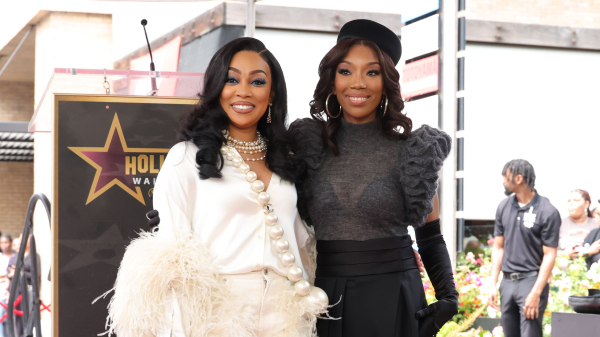
    Although she revealed a new lob just days ago, her hair is pulled back into a sleek, super-long ponytail, with two tendrils left loose to frame her face and emphasize just how perfectly hairstylist Iggy Rosales made her middle part. The way those pieces and the ponytail flow feels like they echo the dangling ribbon elements of her gown.
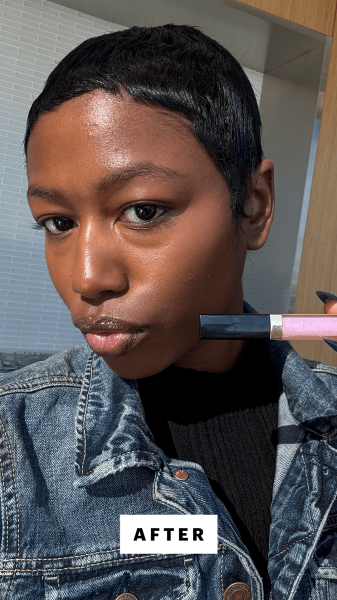
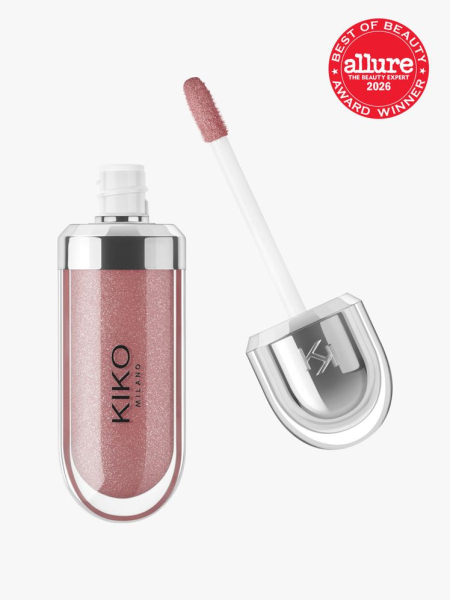
    Kardashian wore a pale-gray Ashi Studio dress styled by Law Roach, featuring a sculptural corset, lace panels, a dramatic train, and crocodile-embossed leather details, including a coordinating leather neckpiece.

    But while the gown was a whole architectural event, we’re honestly still thinking about that tiny, strategic blip of shimmer in her lower eyeliner. Sometimes the smallest detail really makes the biggest impression.